

Last updated: November 11, 2026
The short answer: Here is how to harness train a cat: leave the harness out for a few days, pair every touch with treats, fasten it for just a couple of minutes a day, then add a dragging leash indoors before you ever go outside. Most of the work happens on your living room floor. Go at your cat’s pace, and stop a session before your cat gets upset.
This guide is based on leash training advice from the San Francisco SPCA and VCA Animal Hospitals. The two harnesses mentioned below are research based picks from their Amazon listings; we have not used them at home.
Before You Start
- Pick a harness made for cats. VCA notes that many cats can wriggle out of dog collars and harnesses.
- Check the leash clip. The SF SPCA recommends a harness with the leash attachment on the back, not at the neck.
- Get the basics done. Both groups advise a microchip and up-to-date vaccines before outdoor walks, and VCA adds parasite prevention.
- Have small, soft treats ready. Something your cat really wants, cut into tiny pieces.
Not every cat will enjoy this, and that is okay. VCA says cats trained young may take to it eagerly, while many cats land somewhere in between.
Getting the Size Right
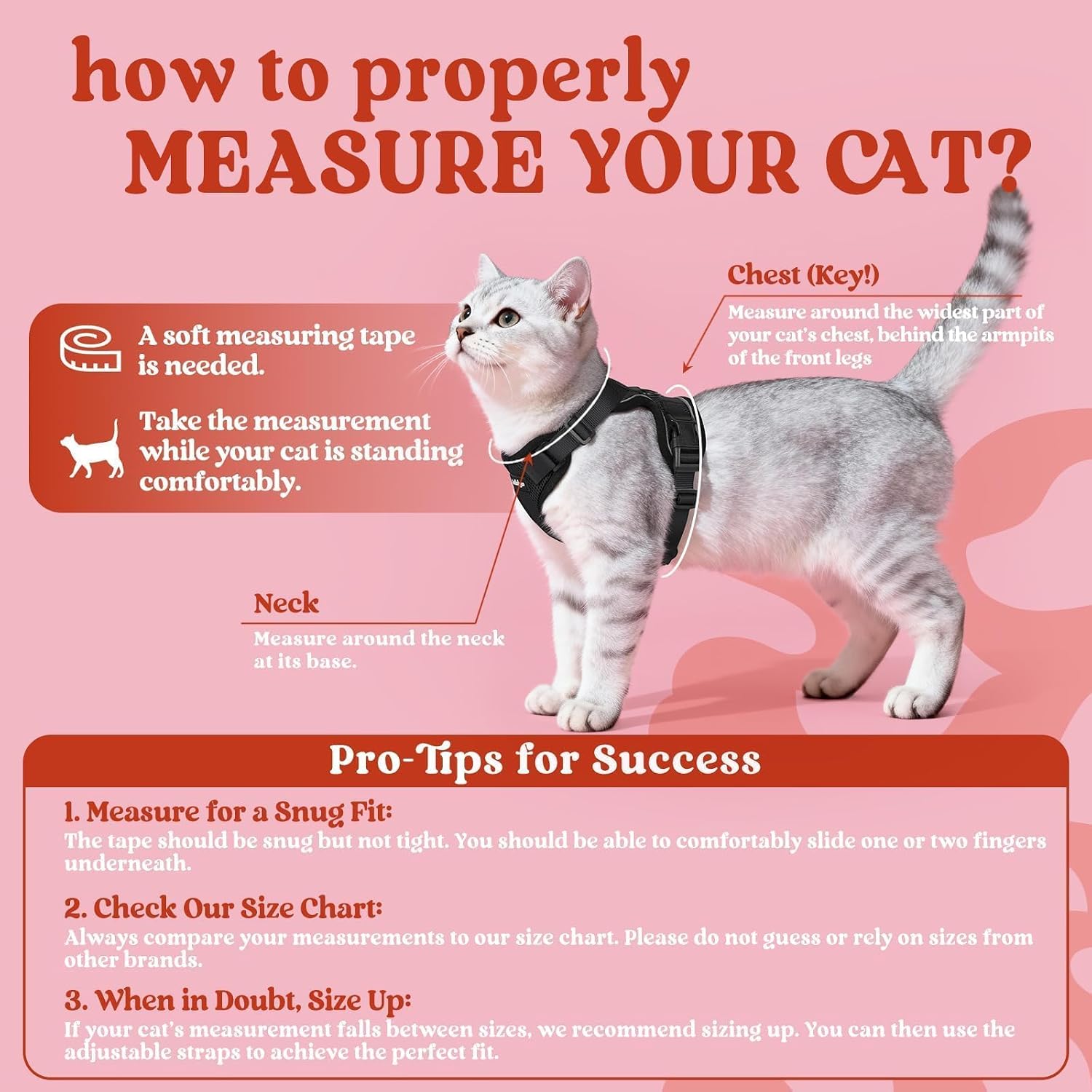
A harness that is too loose is the main reason cats slip out. Here is how to measure cat for harness sizing:
- Use a soft sewing tape. A piece of string marked with a pen and laid against a ruler also works.
- With your cat standing, wrap the tape around the chest just behind the front legs. That is the chest girth, and it is the number most size charts care about.
- If the chart also lists a neck size, measure loosely around the base of the neck.
- Compare with the size chart on the listing for that exact harness. Sizes are not the same across brands.
A treat-distracted cat on the kitchen counter is much easier to measure than a cat on the run. Do it in two quick tries if needed.
The Training Plan, Step by Step
The SF SPCA suggests practicing each step daily for several days before moving on. Short sessions, a few minutes each, work better than one long one.
Step 1: Let the harness become furniture
Leave the harness and leash near your cat’s food bowl or favorite nap spot for several days. The goal is boredom. A harness that smells like home is far less scary.
Step 2: Touch, treat, remove
Let your cat sniff the harness and give a treat. Touch it gently to the body and neck, treat, then take it away. The SF SPCA suggests doing this while your cat is eating, so the harness predicts good things.
Step 3: Drape it over the shoulders
Lay the harness over the shoulders and across the chest between the front legs, then remove it right away. Repeat until your cat barely notices. This is where harness training a cat often slows down, so take as many days as you need.
How to Put On a Cat Harness Without a Fight
Once draping is easy, you can fasten it. A few habits help:
- Choose a calm moment, like right after a meal or a play session, not when your cat is already wound up.
- Work from behind or beside your cat, rather than leaning over them face to face.
- Slip the neck loop on first, then fasten the chest or belly strap. With step-in styles, the cat steps the front legs in and you close it over the back.
- Muffle noisy closures. Snap buckles and hook and loop strips can startle. Practice opening and closing them across the room first so the sound is familiar.
- Check the fit. The SF SPCA advises adjusting it so you can slip two fingers between the harness and your cat’s body.
If you are still unsure how to put a harness on a cat that squirms, ask a helper to offer a lick treat or a spoon of wet food while you work the straps.
Step 4: Short wear time, no leash
Leave the harness on for only a couple of minutes, before your cat loses interest in treats, then take it off. Repeat daily and stretch the time only while your cat stays relaxed. If your cat gets upset, distract with a treat and remove the harness. Some cats “flop” or walk low at first. Play with a wand toy to get them moving again.
Step 5: Add a dragging leash indoors
In an open room with little to snag on, clip on a light leash and let it trail behind your cat while you play or toss treats. VCA suggests a lightweight leash about 4 to 6 feet long. Stay close so it cannot catch on furniture.
Step 6: Hold the leash and follow
Pick up the end and hold it loosely. Let your cat lead. Then practice gentle direction: call softly, drop a treat, and walk to the end of the leash. The SF SPCA says that if your cat turns away, use gentle, steady pressure and wait, then give slack the moment your cat steps toward you. Never jerk or drag.
Step 7: First time outside
Carry your cat out instead of letting them walk through the door, so they do not learn to dash for it. Start somewhere quiet, like your own yard or a balcony, and simply sit together. VCA suggests short yard visits first, then slowly building up to walks around the block.
For trips to a quiet park, a cat bubble backpack or a top loading cat carrier gets your cat there safely and gives them a familiar place to retreat.
Harnesses That Make Training Easier
Any well-fitted cat harness can work. These two are popular starting points. For a fuller comparison of vest and strap styles, see our guide to choosing a cat walking harness.
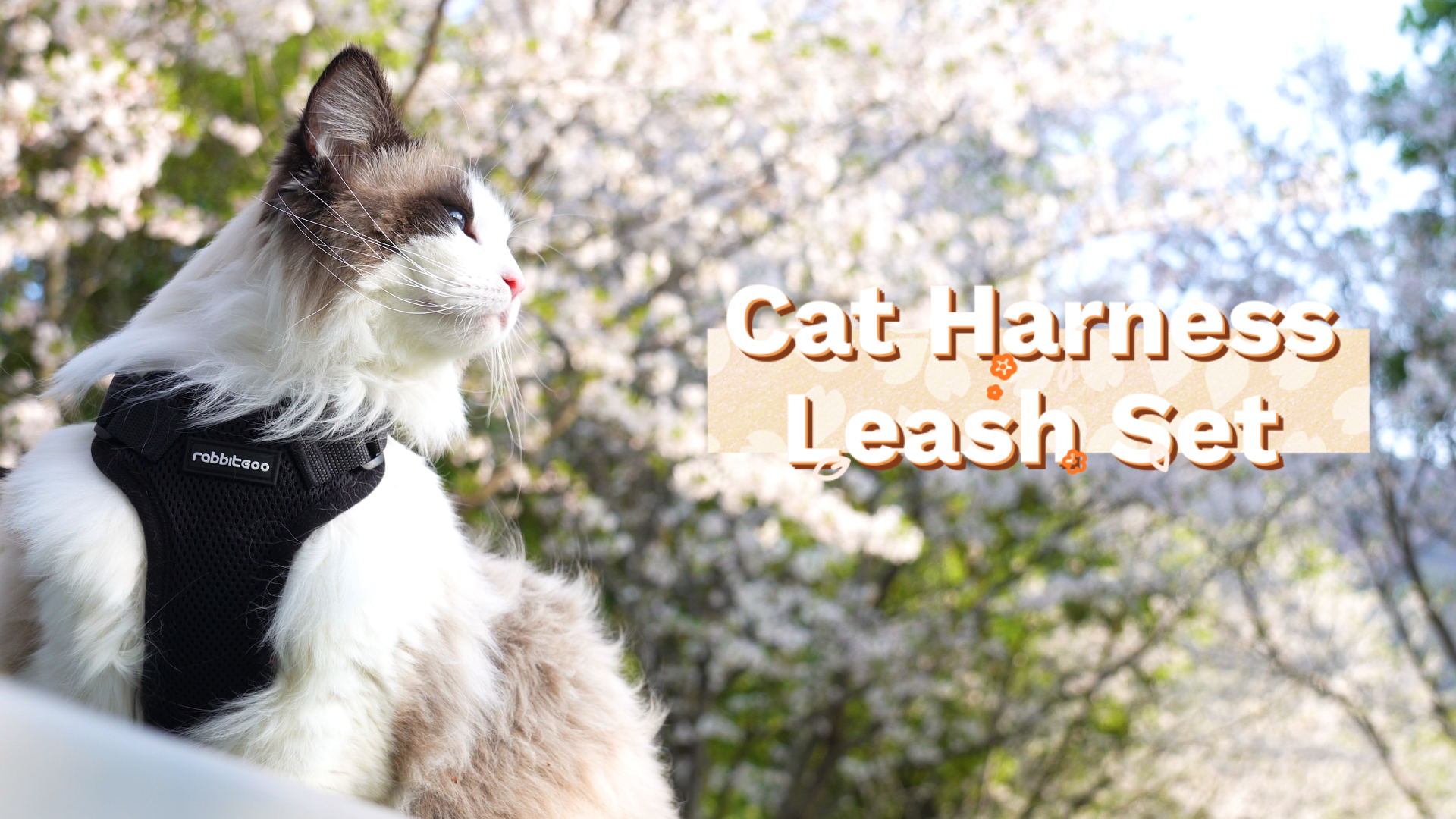
Best for most beginners: Rabbitgoo Vest Harness and Leash Set
Who it suits: Cats who accept a soft vest, and owners who want a harness and leash in one box.
- Soft breathable mesh with snap buckles, a sturdy clip and reflective strips, according to the rabbitgoo listing.
- Adjustable straps and a matching leash are included, according to the listing.
Watch out for: The snap buckles click loudly. Practice the sound away from your cat first.
Our verdict: A sensible first harness for step-by-step training. Check current price.

Prime rabbitgoo Cat Harness and Leash Set, Escape Proof Vest, Black


As an Amazon Associate we earn from qualifying purchases. Product prices and availability are accurate as of the date/time indicated.
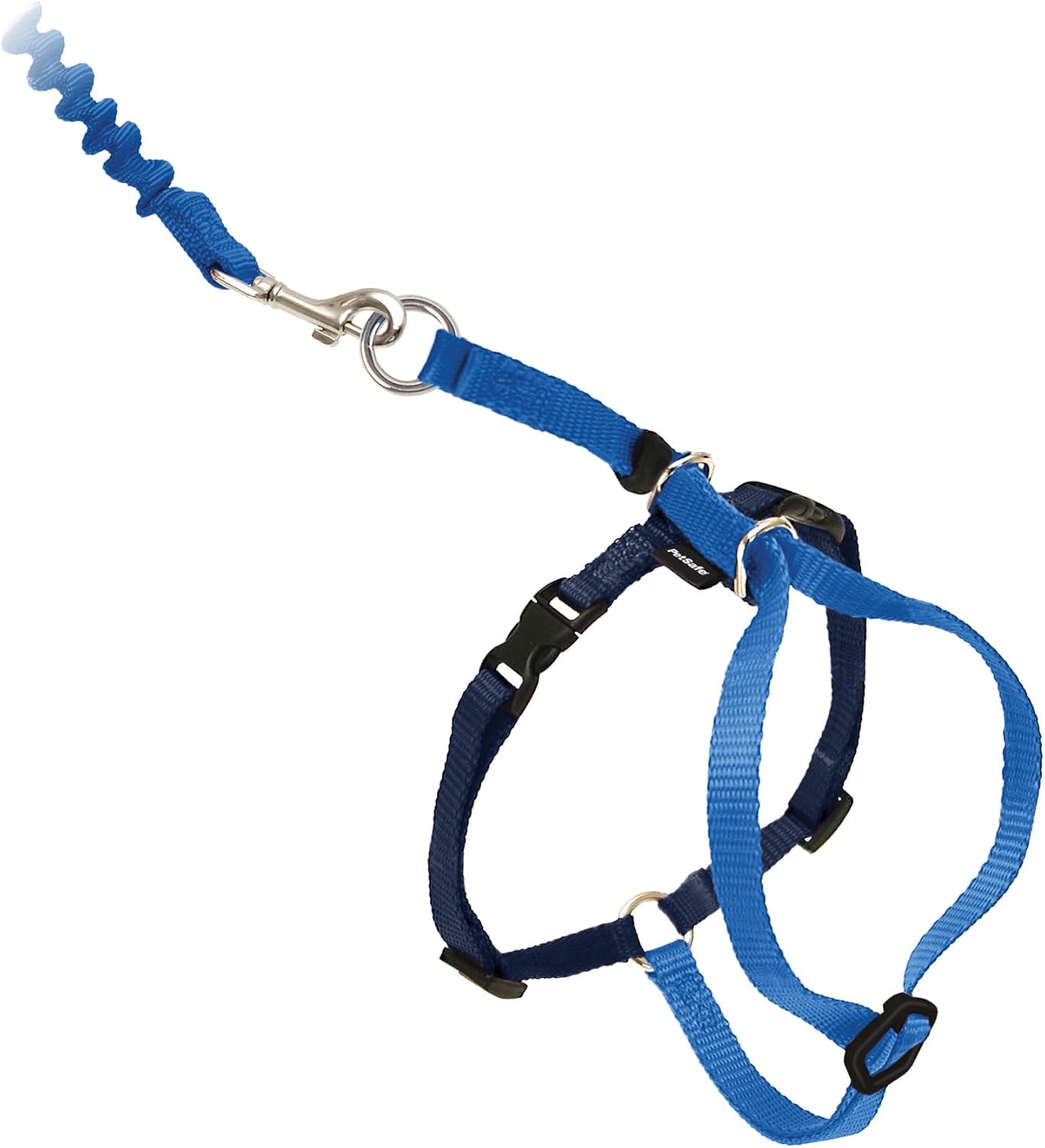
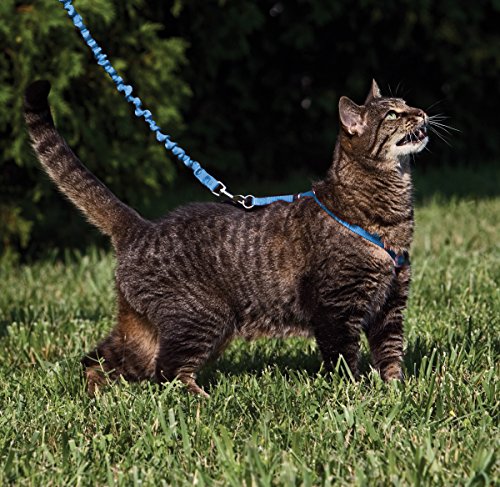
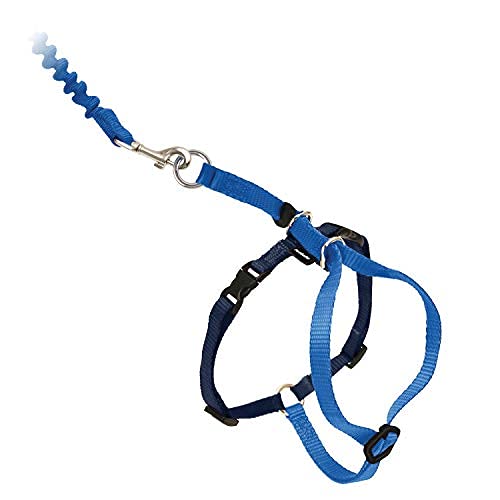
Best for cats who hate fabric: PetSafe Come With Me Kitty
Who it suits: Cats who freeze under a vest and do better with thin straps.
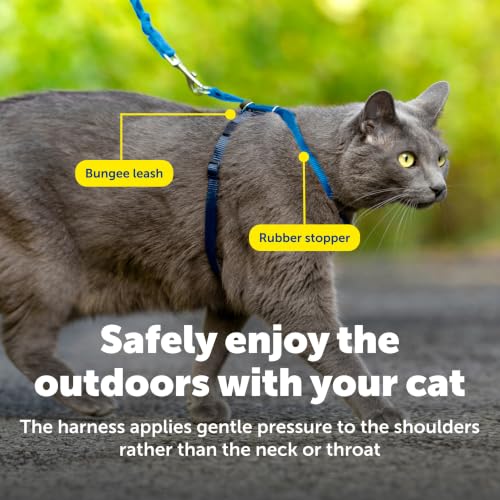
- An adjustable fit that puts gentle pressure on the shoulders, not the neck, according to PetSafe.
- Comes with a bungee-style leash that stretches a little to soften sudden pulls.
Watch out for: Strap styles slip more easily if they loosen. Recheck the two-finger fit before every session. The linked listing is one size, so match your cat’s chest measurement.
Our verdict: A light option for touch-sensitive cats. Check current price.
Prime PetSafe Come With Me Kitty Harness and Bungee Cat Leash, Royal Blue, Large





As an Amazon Associate we earn from qualifying purchases. Product prices and availability are accurate as of the date/time indicated.
Signs to Slow Down
The SF SPCA lists stalling, crouching low and trying to escape as signs that a cat is scared. If you see them:
- Go back one step and stay there for a few more days.
- Shorten sessions so they end on a calm note.
- Accept that some cats are happier indoors. The SF SPCA notes that a fearful cat may not benefit from walks, and window perches and daily play can meet the same need.
Safety Rules That Never Change
- Never tie your cat up outside, even for a minute. The SF SPCA warns a tied cat can get tangled or be unable to escape a dog.
- Skip retractable leashes. VCA says long or retractable leashes let cats climb trees or leap fences.
- Pick your cat up if an off-leash dog appears, as VCA advises.
- Take the harness off after each session so it cannot snag when you are not watching.
Quick Answers
How long does harness training take?
There is no fixed timeline. Since the SF SPCA suggests several days per step, a relaxed cat may be ready for the yard in a few weeks, while a nervous cat may need much longer.
Is my older cat too old to learn?
Not necessarily. Young cats may adapt faster, but calm adult cats can learn too. Just expect slower progress and keep sessions short.
My cat cries at the door now. What should I do?
The SF SPCA advises not harnessing your cat while they are crying or pestering. Wait for quiet, then reward the calm with a walk, and keep walks on a regular schedule.
The Bottom Line
Knowing how to harness train a cat comes down to tiny steps, lots of treats and a cat who never feels forced. Get the size right, practice indoors until the harness and leash feel normal, and let your cat decide how far each outing goes. For more gear and trip advice, browse our travel and outdoor guides.
Sources
- Leash Training (Cats), San Francisco SPCA
- Curious About Leash Walking Your Cat?, VCA Animal Hospitals
Want to know how we choose products? Read How We Review, or go back to the BestPurrPicks homepage for more cat care guides.







Write Your Review
No reviews yet. Be the first to share your experience!