

Last updated: November 13, 2026
The short answer: An airline approved cat carrier is simply one that meets your airline’s in-cabin rules: it fits under the seat in front of you, has good airflow, closes securely and lets your cat stand and turn around. There is no single official approval, so check your airline’s current size limits before you buy, then get your cat used to the carrier for weeks before the flight.
These picks are research based. They come from the brands’ Amazon listings and travel guidance from IATA, the AVMA, UC Davis and TSA. We have not used these products at home.
Important: This guide is general information, not veterinary advice. Airline pet rules change often and differ by airline, route and aircraft. Always confirm the current rules with your airline, and talk to your vet before any flight.
What “Airline Approved” Really Means
The label on a product listing is a marketing claim, not a certificate. IATA, the global airline trade group, says it does not certify or endorse commercial pet containers, and that airlines can refuse ones that do not meet their rules. Each airline sets its own limits, and the same airline may allow a different size on a smaller plane.
IATA’s in-cabin guidance describes what a good airline cat carrier needs:
- It fits under the seat in front of you, or wherever the airline tells you to stow it.
- Your cat can sit, stand, turn around and lie down in a natural position.
- Good ventilation on the sides.
- Escape proof and leak proof, with absorbent bedding inside.
IATA also notes that soft-sided carriers can compress under the seat and block airflow, so a bag with a firmer frame or stiff sides is the safer choice.
How to Check the Size Before You Buy
- Look up your airline’s pet-in-cabin page for the maximum carrier size and any weight limit for pet plus carrier. Note whether it changes by aircraft.
- Compare the carrier’s outside dimensions, not the inside ones. Soft bags can often squash a little in height, hard carriers cannot.
- Measure your cat standing and lying down. A cat who barely fits on day one will be miserable after a long delay.
- Book your cat’s spot early. IATA notes airlines limit how many pets can fly in the cabin, and those spots can be scarce on small planes.
If your cat is too big for any carrier that fits under a seat, flying in the cabin may not be possible. Ask your airline about other options, or consider driving.
Our Picks
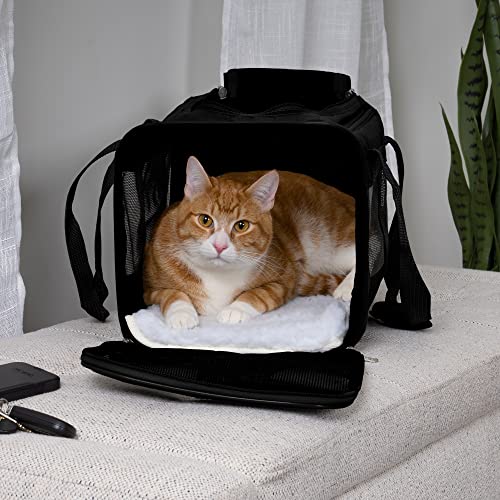
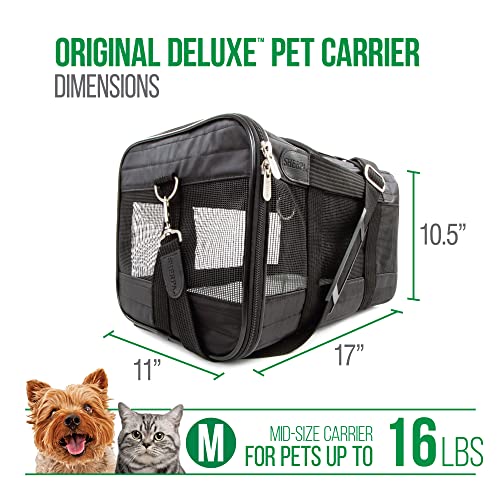
Best for most flyers: Sherpa Original Deluxe Travel Pet Carrier
Who it suits: Small to medium cats flying in the cabin, and owners who want a classic shoulder bag.
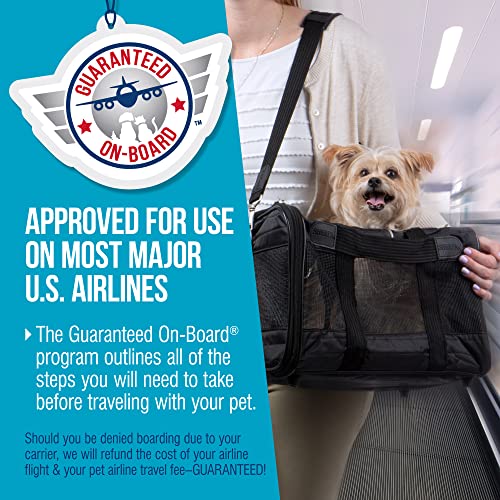
- A soft-sided bag labeled airline approved and part of Sherpa’s Guaranteed On Board program, according to the listing.
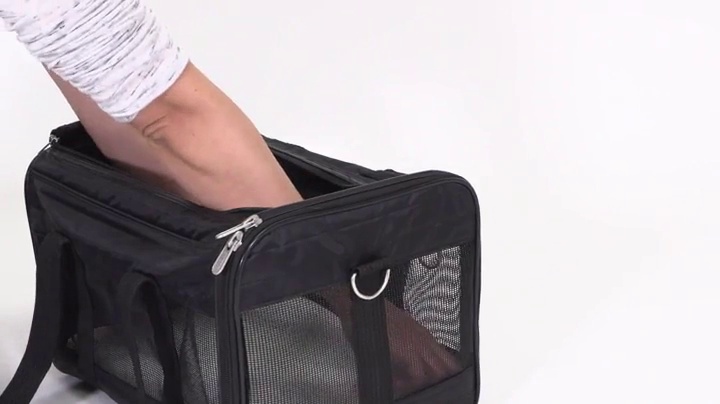
- Product descriptions note a top zip opening, an end entry and mesh panels for airflow, and it comes in several sizes.
Watch out for: Pick the size by your airline’s limits and your cat’s weight, and read the program terms before relying on them. Like any soft bag, keep the sides from being crushed under the seat.
Our verdict: The long-standing choice for cabin travel, with a top opening that still helps at the vet. Check current price.

Prime Sherpa Original Deluxe Travel Pet Carrier, Airline Approved & Guaranteed On Board - Black, Medium




As an Amazon Associate we earn from qualifying purchases. Product prices and availability are accurate as of the date/time indicated.
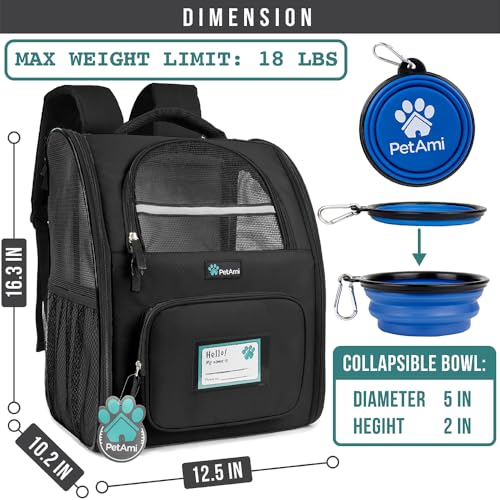
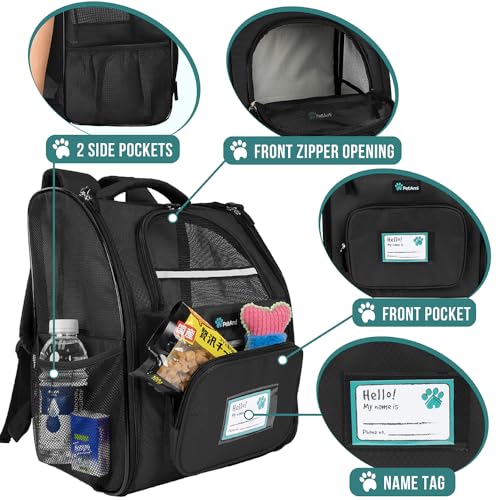
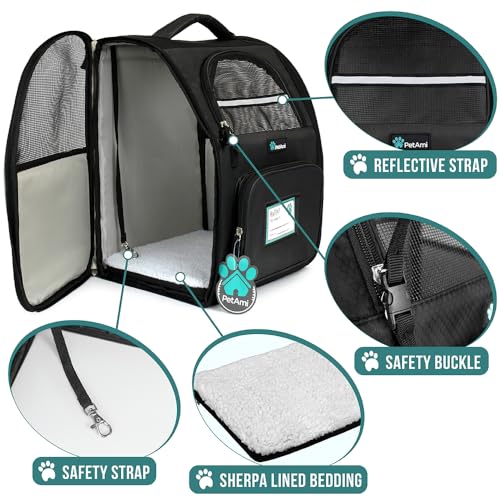
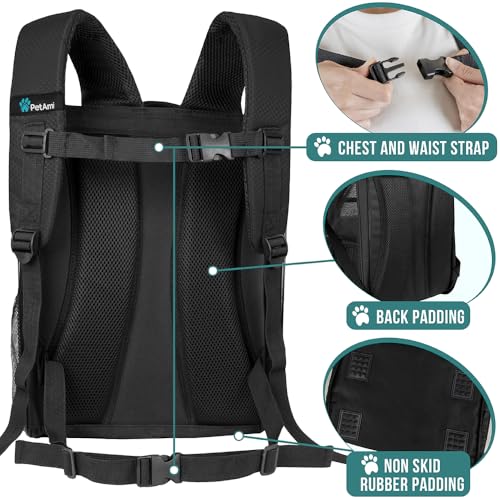
Best hands-free option: PetAmi Deluxe Backpack Pet Carrier
Who it suits: Owners who juggle a suitcase, coffee and boarding pass, and cats who like a more enclosed space.
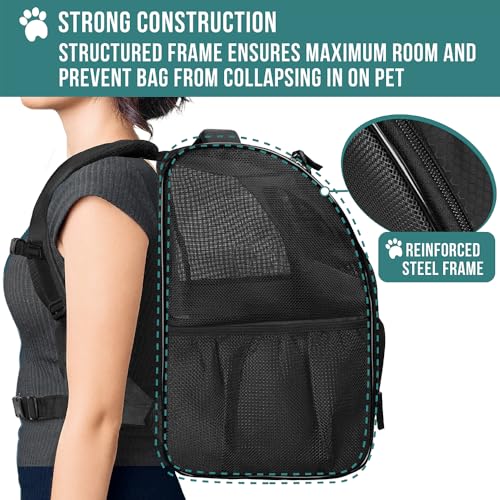
- A structured, no-collapse design with two side entries, according to the PetAmi listing.
- Rated for pets up to 18 pounds, according to PetAmi, and listed as airline approved.
Watch out for: Backpacks are often taller than shoulder bags. Check the height against your airline’s under-seat limit before you fly.
Our verdict: A good pick for long airport walks, as long as the dimensions match your airline. Check current price.

Prime PetAmi Dog Backpack Carrier Airline Approved Cat Pet Puppy Bag, Black



As an Amazon Associate we earn from qualifying purchases. Product prices and availability are accurate as of the date/time indicated.
Best for confident cats: Travel Cat The Fat Cat Backpack
Who it suits: Calm, curious cats who already enjoy backpack outings.
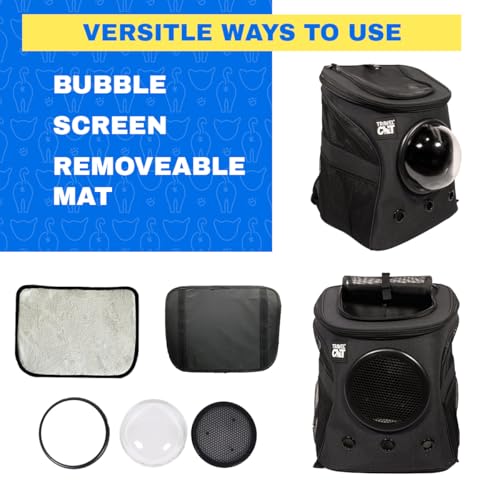
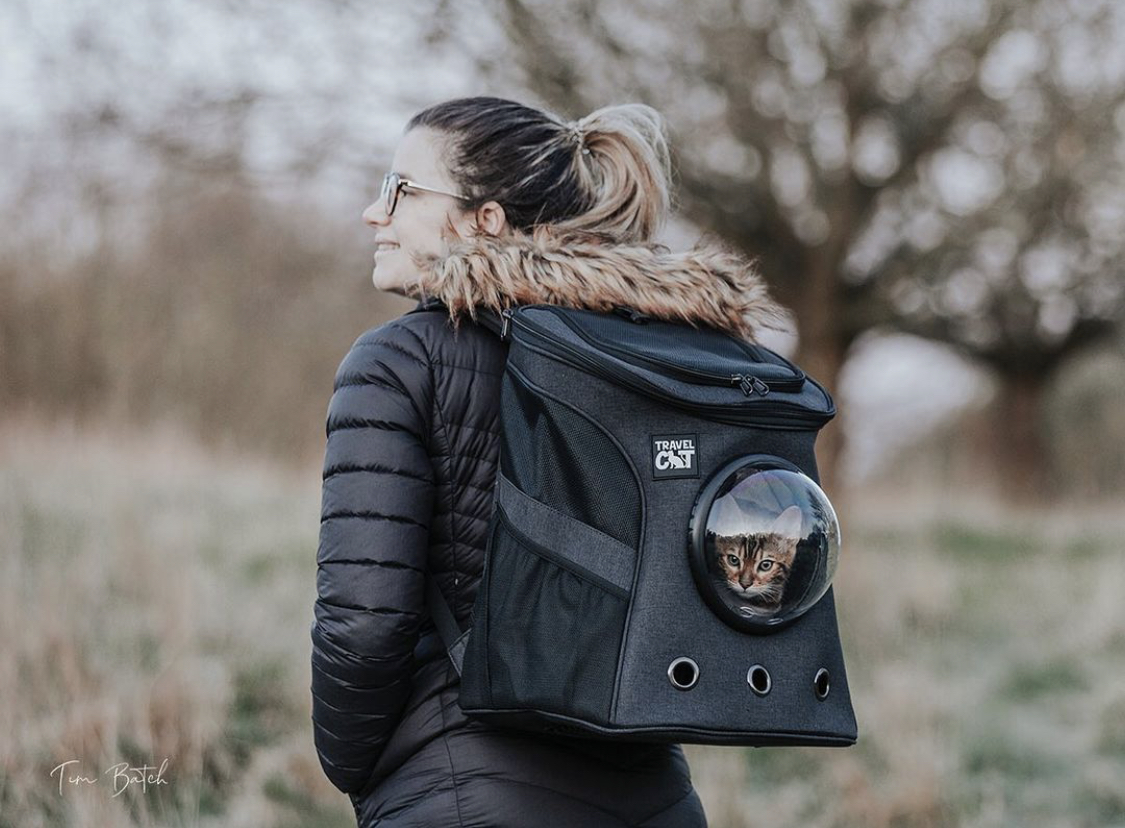
- A backpack with a bubble window, listed as airline approved, according to the Amazon listing.
- Travel Cat describes mesh panels and vent holes for airflow, a built-in leash clip and a removable, washable liner. It sells a regular size for cats up to 25 pounds and a smaller Mini.
Watch out for: A heavier cat in a bigger bag may exceed your airline’s weight or size limit, even if the bag itself says airline approved. The bubble can also feel too exposed for nervous flyers.
Our verdict: Worth a look for seasoned travelers, but confirm the fit with your airline first. Check current price.

Prime Fat Cat Backpack Carrier - Airline Approved Cat Carrier with Space Capsule Bubble for for Small Cats, Kitten - Premium Charcoal Cat Carrier Backpack for Outdoor, Travel, Hiking, Pet Supplies






As an Amazon Associate we earn from qualifying purchases. Product prices and availability are accurate as of the date/time indicated.
Which One for Your Situation?
- First flight, small or medium cat: Sherpa Original Deluxe.
- Long walks through big airports: PetAmi backpack.
- A calm cat who already loves the backpack: Travel Cat Fat Cat Backpack.
- Not sure soft or hard suits your cat: our guide to choosing a hard cat carrier or a soft one explains the trade-offs for car and vet trips.
Getting Your Cat Ready to Fly
- Start weeks ahead. UC Davis suggests leaving the carrier out with a soft blanket, toys and treats, and feeding your cat in it so it feels safe.
- Practice short trips in the carrier, as UC Davis advises, so travel is not brand new on flight day.
- Use a harness. At the checkpoint you will need to take your cat out, so a snug harness gives you something to hold. If your cat has never worn one, our guide to harness training a cat walks through it step by step.
- ID first. UC Davis recommends a microchip and a collar tag with your contact details, plus your details on the carrier.
- Pick the flight carefully. The AVMA suggests nonstop flights and avoiding busy holiday travel.
- Food and water. Ask your vet about meal timing. IATA suggests a light meal about two hours before the flight.
At the Airport and On Board
- Security: TSA asks you to take your pet out of the carrier just before screening and carry it through. The empty carrier goes through the X-ray machine, but your pet never does.
- Keep the carrier closed during the flight. IATA advises not opening it on board.
- Keep it calm and dim. IATA notes low light helps pets settle. A light cover over part of the mesh can help, as long as airflow stays open.
- Pack extras: puppy pads or a spare liner, wipes, a small bag of litter, and food and medicine for a few days longer than your trip, as UC Davis suggests.
When to See a Vet
Book a visit before any flight, and especially if:
- You are crossing state or country lines. The AVMA says interstate and international travel generally needs a health certificate from an accredited vet, often signed within 10 days of the flight. International trips may need months of paperwork, IATA notes.
- You are thinking about sedation. The AVMA warns sedatives can raise the risk of heart and breathing problems and are generally not allowed by airlines. UC Davis notes they can affect body temperature. Never give anything without your vet’s advice.
- Your cat is a young kitten. The AVMA and IATA say kittens must be at least 8 weeks old and weaned to fly.
- Your cat is sick, injured, elderly or has a chronic condition. IATA notes such animals may not be fit to fly.
- Your cat panics badly in the carrier, even on short car trips. Your vet can help you plan a gentler approach.
Quick Answers
What is the best cat carrier for plane trips with a big cat?
Look for the largest carrier your airline allows, with a firm frame and mesh on several sides. If your cat cannot stand and turn around in it, a cabin flight may not be a safe fit.
Can I use any soft bag as a cat carrier for airplane travel?
Only if it meets your airline’s size and ventilation rules and closes securely. Purses and tote bags without proper mesh and zips are not a good idea.
Does my cat count as my carry-on?
On many airlines, a pet in the cabin takes the place of a carry-on bag, and there is usually a fee. Policies vary, so check with your airline when you book.
The Bottom Line
The right airline approved cat carrier fits your airline’s under-seat limit, keeps its shape, breathes well and gives your cat room to turn around. Check the rules for your exact flight, start carrier and harness practice early, and see your vet about paperwork before you go. For a hands-free option on the ground, see our cat backpack carrier guide, and find more trip help in our travel and outdoor section.
Sources
- Guidance for Passengers Traveling with Their Dog or Cat in the Cabin, IATA
- Traveling with Your Dog or Cat, American Veterinary Medical Association
- Traveling with Cats, UC Davis School of Veterinary Medicine
- Tips for Traveling with Small Pets Through the Security Checkpoint, TSA
Want to know how we choose products? Read How We Review, or go back to the BestPurrPicks homepage for more cat care guides.







Write Your Review
No reviews yet. Be the first to share your experience!