

Last updated: November 15, 2026
The short answer: If you are looking up how to get cat in carrier tips, the secret is to start days before you need it: leave the carrier out, feed treats inside, and let your cat walk in on their own. On the day, close the doors to one small room, then lower your cat in through a top opening, back end first, or wrap them in a towel. Stay calm and quiet, and never chase.
This guide is based on advice from the American Association of Feline Practitioners (AAFP), Langford Vets at the University of Bristol and RSPCA Victoria. The two products mentioned below are research based picks from their Amazon listings; we have not used them at home.
Important: This guide is general information, not veterinary advice. If your cat panics badly, hurts themselves or you, or gets sick on every trip, talk to your vet before the next visit.
Why Your Cat Hates the Carrier
For most cats, the carrier only appears right before a car ride and a vet visit. It smells strange, it comes out of a closet, and the person holding it is tense. Your cat learns fast. By the third trip, the sight of the box is enough to send them under the bed.
The fix is to change what the carrier means. Langford Vets suggests keeping it out at home as normal furniture, so it stops signaling a vet visit. The AAFP adds that it should live in a room your cat already uses, not a garage, basement or closet.
Days Ahead: Make the Carrier Boring
This part does most of the work, and it costs nothing but time. The AAFP suggests a step by step approach, giving your cat time to relax at each step before moving on:
- Start with a blanket. Let your cat sleep on a soft blanket or towel for a few days so it smells like them.
- Put that blanket in the bottom half of the carrier. If the top comes off, leave it off at first, so it is just an open bed.
- Add the top once your cat lies there calmly. Keep the door open.
- Feed meals or treats inside. RSPCA Victoria suggests doing this regularly so the carrier predicts good things.
- Close the door for a short time, then open it before your cat gets restless. Slowly build up the time.
- Practice lifting. Pick the carrier up from underneath and set it down again, then carry it a few steps. The AAFP advises supporting it from the bottom, not just the handle.
RSPCA Victoria also suggests pairing the carrier with a short phrase, like “travel time,” and praising your cat each time they step in. Some cats learn to walk in on cue.
On the Day: Step by Step
Even well-prepared cats can have an off day. This is how to get a cat into a carrier when the appointment is today:
- Bring the carrier into a small room first, like a bathroom, and close the door. RSPCA Victoria suggests a room where your cat cannot hide under furniture.
- Prepare the carrier before your cat is in the room. Blanket inside, top opening ready, door open.
- Bring your cat in calmly, without grabbing or chasing. Speak softly.
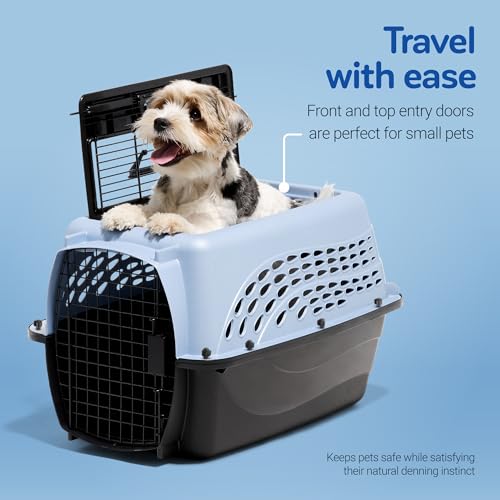
- Use the top if you can. Langford Vets notes that a basket that opens at the top is much easier to use, since you can lower your cat straight in.
- Lower them in back end first, supporting the chest and hind legs, so their front paws do not catch the edges.
- Close it smoothly and give a treat through the door if your cat will take one.
Langford Vets advises keeping the carrier nearby but out of sight until you need it, and working smoothly so you succeed on the first try. Each failed attempt makes the next one harder.
For a Cat Who Fights It
- The towel wrap. Langford Vets suggests wrapping your cat in a thick towel or blanket that smells familiar, then putting cat and towel into the basket quickly but gently so they cannot grab the sides.
- Take the top off. With a front door carrier, RSPCA Victoria suggests removing the top half, settling your cat into the bottom while holding them in a towel, then putting the top back on and securing it.
- Try a different style. If the front door is the battle every time, RSPCA Victoria suggests switching to a top-loading carrier.
- Do not yell or chase. RSPCA Victoria warns this teaches your cat to link the carrier with stress and fear, which makes every future trip harder.
If you have a heavy cat, a roomy hard kennel with a top door makes all of this easier; our big cat carrier guide covers sizing.
Two Things That Can Help
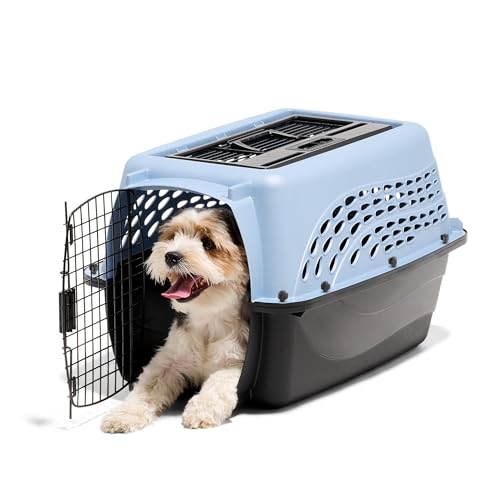
A top door that makes loading easier: Petmate Two Door Top Load Kennel
Who it suits: Owners who struggle to push a cat through a front door.
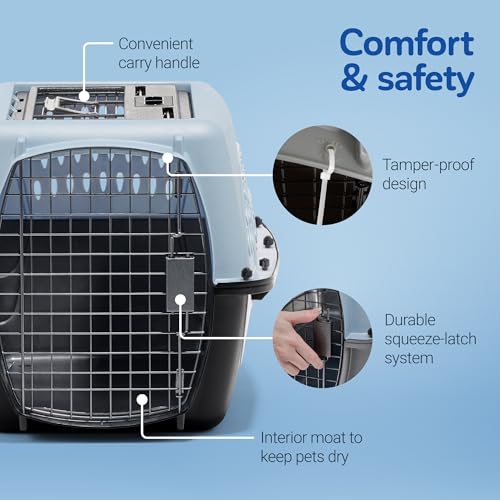
- A hard plastic kennel with a top door and a front door, according to Petmate’s listing.
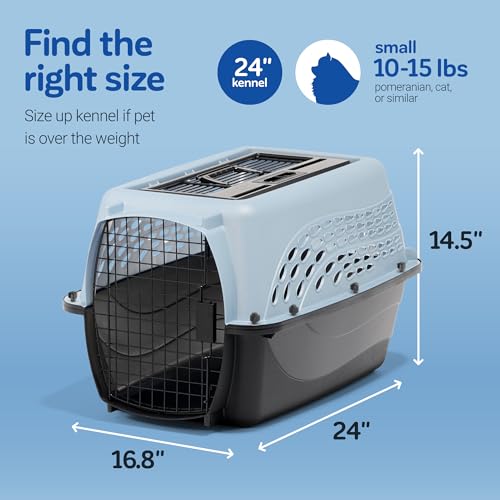
- Made in the USA from Petmate’s recycled EcoTEC plastic, in a 24-inch size, according to the listing.
Watch out for: Very long cats may need a bigger kennel. Check the size guidance against your cat’s weight and length.
Our verdict: The simplest upgrade if loading is the hardest part of vet day. Check current price.

Prime Petmate Two Door Plastic Pet Kennel for Small Dogs and Cats, 24in, Blue



As an Amazon Associate we earn from qualifying purchases. Product prices and availability are accurate as of the date/time indicated.
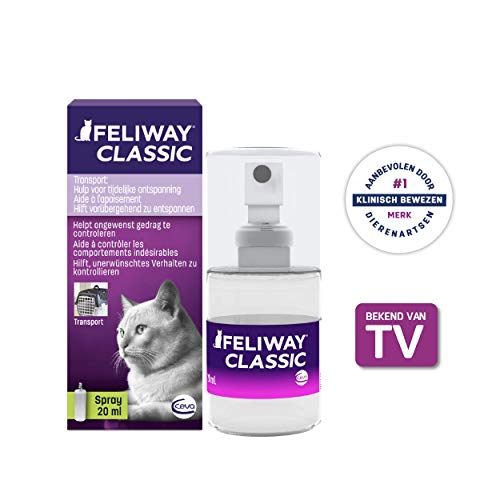
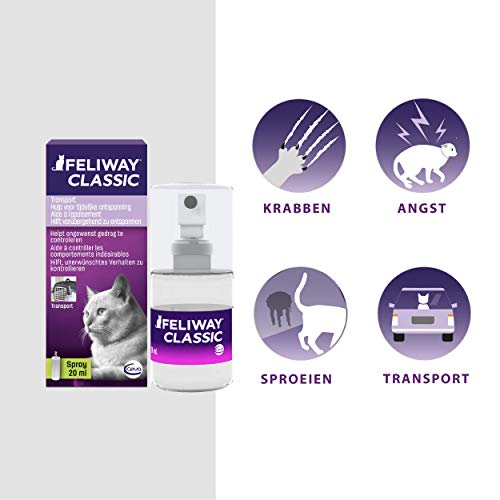
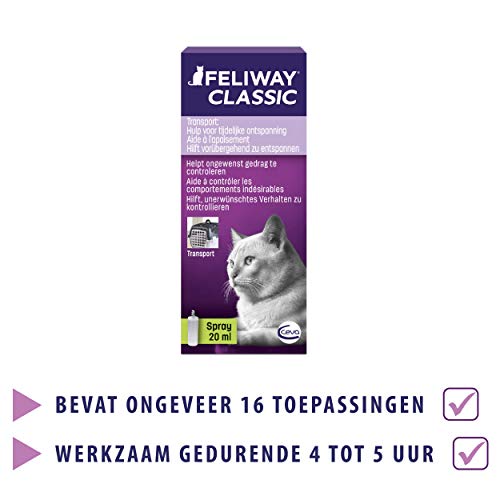
A calmer-smelling carrier: FELIWAY Classic Travel Spray
Who it suits: Cats who get worked up the moment they smell the carrier.
- A calming pheromone spray in a 20 mL travel size, according to the FELIWAY listing.
- The AAFP suggests spraying calming pheromone products on the blanket 15 minutes to 4 hours before travel, with your cat out of the room while you spray.
Watch out for: Results vary from cat to cat. It works best alongside carrier practice, not instead of it.
Our verdict: A low-effort extra that some cats respond to well. Check current price.

Prime FELIWAY Classic Cat Calming Pheromone Travel Spray (20 mL)





As an Amazon Associate we earn from qualifying purchases. Product prices and availability are accurate as of the date/time indicated.
In the Car and at the Clinic
- Cover the carrier with a towel on the way to the car. The AAFP says this cuts down on sights and sounds.
- Put it on the floor behind the front seats, where the AAFP notes it cannot slide or fall.
- Keep it quiet. Turn off loud music, and do not open the carrier during the drive, even if your cat cries.
- Ask about a top-off exam. The AAFP notes that a removable top lets your vet examine your cat while they stay in the base, which can feel safer.
Flying soon? Our airline cat carrier guide explains cabin size rules and how to prepare.
When to See a Vet
Call your vet before the next trip if you notice any of these:
- Panic that does not settle, such as frantic clawing, heavy panting or open-mouth breathing in the carrier.
- Vomiting or drooling in the car. The AAFP says your vet can advise on anti-nausea medication.
- Injuries to your cat, or to you, during loading.
- Stress that carrier practice has not improved. The AAFP notes that vets can prescribe medication to ease travel stress for some cats.
Quick Answers
How long does carrier training take?
It depends on the cat. A relaxed cat may walk in after a few days of treats. A cat with bad memories of the box can take weeks. Start well before your next appointment.
How to get a cat in a carrier fast in an emergency?
Close yourself in a small room with your cat, wrap them in a thick towel, and lower them into a top opening or the bottom half of the carrier. Then call your vet and tell them your cat was hard to handle.
Can two cats ride in one carrier?
The AAFP advises a separate carrier for each cat, even cats who get along at home.
The Bottom Line
The real answer to how to get cat in carrier battles is preparation: a carrier that lives in your home, smells like your cat and comes with treats. On the day, use a small room, a top opening and a towel if needed, and stay calm. For more trip planning help, browse our cat travel and outdoor guides.
Sources
- Visiting Your Veterinarian: Getting Your Cat to the Veterinary Practice, American Association of Feline Practitioners
- Cat Carrier Advice, Langford Vets, University of Bristol
- Getting Your Cat Into a Carrier, RSPCA Victoria
Want to know how we choose products? Read How We Review, or go back to the BestPurrPicks homepage for more cat care guides.







Write Your Review
No reviews yet. Be the first to share your experience!