

Last updated: October 13, 2026
The short answer: How tall should a cat tree be? Tall enough that your cat can stretch fully on the scratching post, and no taller than you can make stable. In practice that means a post longer than your cat’s stretched-out body, a tree that fits your room with headroom to spare, and a heavy, wide base. Height matters less than three other things: stability, platform size and where you put it. A wobbly 6 foot tower is often ignored, while a solid 4 foot tree by a window tends to get daily use.
This guide is research based. It draws on advice from the Cornell Feline Health Center, the American Association of Feline Practitioners and VCA Animal Hospitals, plus the patterns cat owners report. We have not built or used these specific trees at home.
Why Cats Need Vertical Space
Many owners wonder why do cats like cat trees so much when the couch is right there. A good tree covers three needs at once:
- Scratching. According to the Cornell Feline Health Center, scratching is mostly a marking behavior. It leaves scent from glands in the paws and sheds the old outer layer of the claws. It is not something you can train out of a cat, only redirect.
- A safe lookout. VCA Animal Hospitals notes that for many cats a safe space works best in a raised spot. Height lets a cat watch the room without being approached.
- Exercise and boredom relief. Cornell also points to climbing perches and condos as a way to ease the boredom that can lead to destructive behavior.
How Tall the Tree and Post Should Be
Split the question in two: the scratching post and the climbing height.
The scratching post
Cornell’s rule of thumb is that a post should be at least as tall as your cat standing on its hind legs with the front legs stretched out. The AAFP says the same thing another way: a sturdy post taller than the cat’s body length. Measure your own cat stretched out against a wall. For reference, Cats.com found a 32 inch post tall enough for its cats to stretch fully. Short posts on many budget trees are too low for a real stretch, which is one reason cats keep going back to the sofa arm.
The climbing height
Here is a simple way to answer what size cat tree should i get, based on your cat:
- Kittens and young adults: A mid-size tree around 4 to 5 feet with several levels is usually enough. They will outgrow small platforms, so look at the platform size, not just the height.
- Large or heavy cats: Wide and solid matters more than tall. Look for big platforms and a mid-level perch so the cat does not have to reach the top to enjoy the tree.
- Senior cats or cats with stiff joints: Choose a lower tree with short gaps between platforms, or add steps or a ramp. If your cat walks up to a platform, looks up and walks away, the jump is too big.
- Confident climbers in multi-cat homes: A taller tree, or several shorter ones, lets cats spread out at different heights.
One furniture maker, CatsPlay, suggests keeping the top perch at least 18 inches below the ceiling so a cat can sit up, and a base footprint of at least one third of the tree’s height. Treat those as sensible starting points rather than official standards.
Stability Comes First
Every source agrees on this. The ASPCA says cats want a post that “won’t shift or collapse when used,” and Cornell says it must not topple during use. A cat that feels a tree sway once may never trust it again. Before you buy, check:
- Base size and weight. A wide, heavy base resists tipping. As CatsPlay’s quality lead puts it, tall and narrow with a small base is not fine.
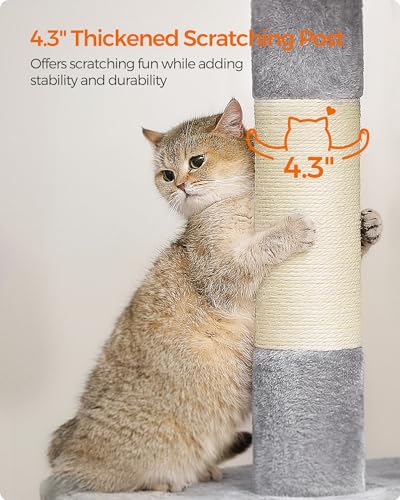
- Post thickness. Thicker posts flex less. CatsPlay suggests about 4 inch posts rather than 3 inch ones on trees over 60 inches.
- Wall strap. Many tall trees include an anti-tip strap. Use it, especially with big cats or jumpers.
- What the posts are made of. Some trees use cardboard tubes wrapped in sisal. In its guide to trees for Maine Coons, Catster suggests thick cardboard can be fine on a tree that weighs over 30 pounds, with solid wood or wall-mounted designs as options for heavier cats.
Materials: What Cat Trees Are Made Of
If you have ever wondered what are cat trees made of, most are some mix of the following, and the mix explains a lot about price and lifespan:
- Frame: Engineered wood (particleboard or MDF) on most budget and mid-range trees. Solid wood on premium trees.
- Posts: Wood or thick cardboard tubes, usually wrapped in sisal rope.
- Covering: Faux fur, carpet or fabric. Faux fur is soft for napping but can shred. Carpet suits cats that already scratch carpet, but it sheds fibers.
- Scratching surface: Sisal rope or sisal fabric. The AAFP notes many cats prefer sisal, while others like cardboard, carpet or wood.
This also answers why are cat trees so expensive at the top end. Solid wood, replaceable sisal posts and heavier bases cost more to make and to ship than particleboard and cardboard tubes.
Where to Put It
Placement often decides whether a tree gets used. When owners ask where to put cat tree furniture, the best answers come from how cats behave:
- Near a window. A view of birds and passing life is a big draw for many indoor cats.
- In the room where people spend time. Cats like to be near their family, just slightly above it. A tree hidden in a spare room is often ignored.
- Next to the spot your cat already scratches. Cornell suggests placing a post right beside the problem area, then moving it gradually if you want it elsewhere. The AAFP adds that cats often scratch when they wake up, so a scratcher near a sleeping spot helps.
- Away from the litter box and food. VCA advises keeping each resource in its own spot. For the litter side, see our guide on where to put litter box in house and apartment layouts.
How Many Trees and Scratchers You Need
A common question is how many cat trees should i have. There is no fixed number, but the guidance is clear:
- Scratchers: The AAFP recommends a variety of scratching options in many locations around the home. Since some cats scratch upright and others scratch flat, a simple start is one tall post and one horizontal scratcher.
- Resting spots: VCA suggests at least two resting areas, and in multi-cat homes at least as many safe spaces as you have cats, ideally with more than one way in and out.
- Multi-cat homes: One large tree can work for two friendly cats, but cats that do not get along need separate high spots so one cannot guard them all.
Starting Points Worth a Look
These are examples of the features above done well. Our dedicated buying guides go deeper by situation.
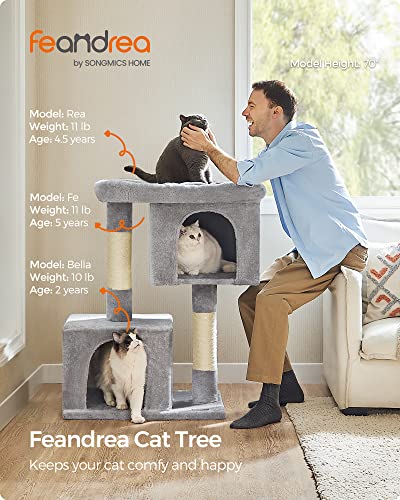
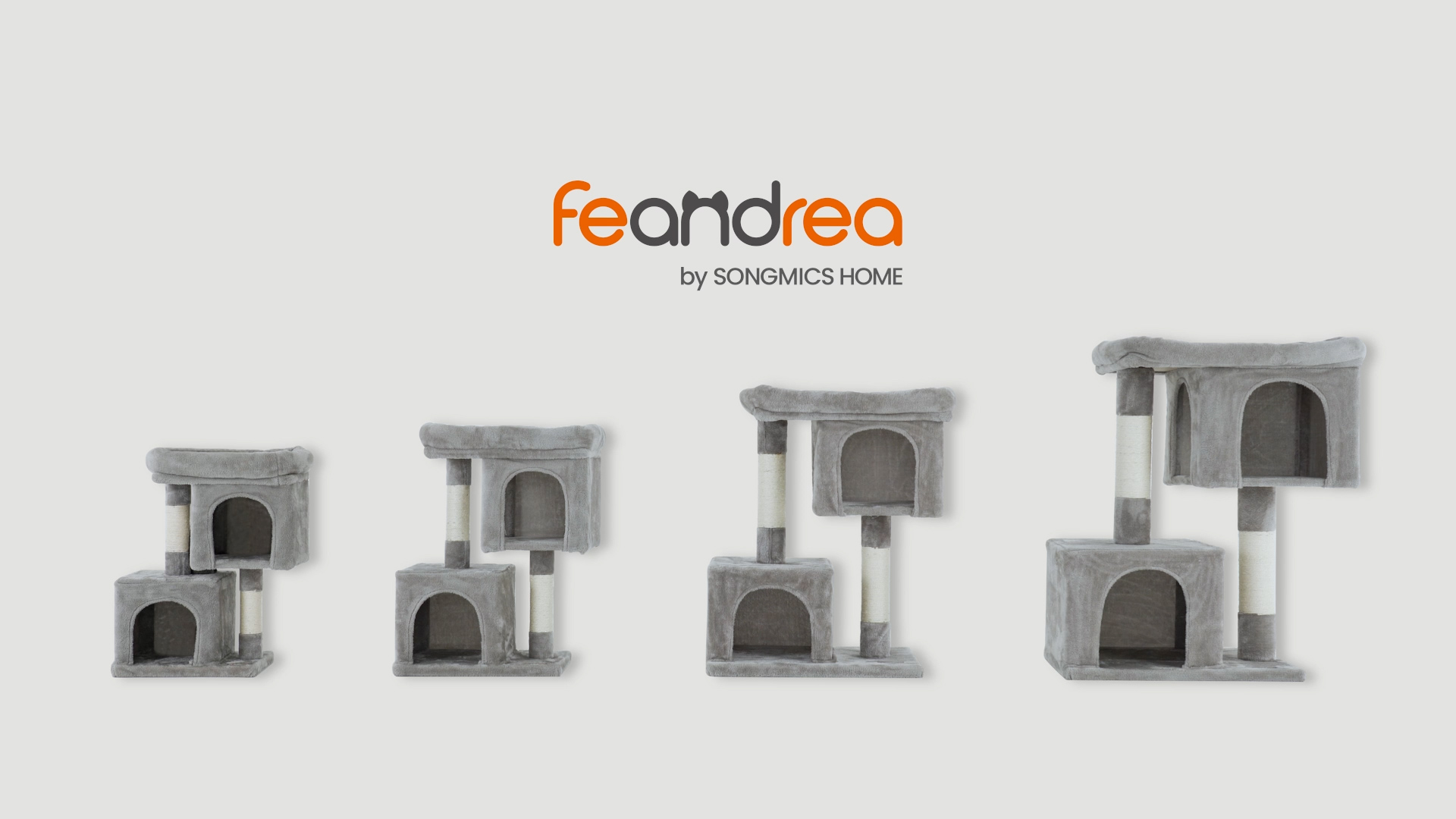
A wide, stable tree: Feandrea 40.6-Inch Cat Tree
Who it suits: Owners who want a sturdy, mid-height tree with a big top perch rather than a tall, narrow tower.
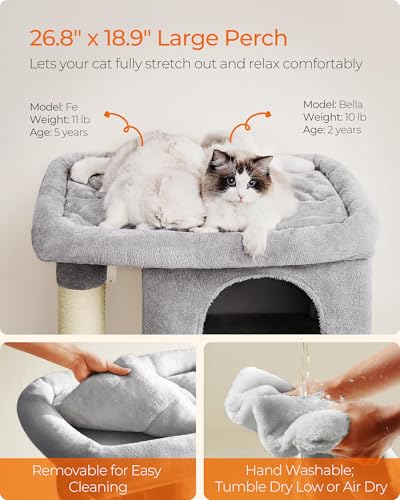
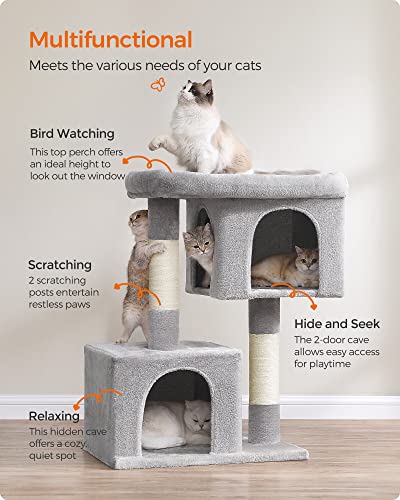
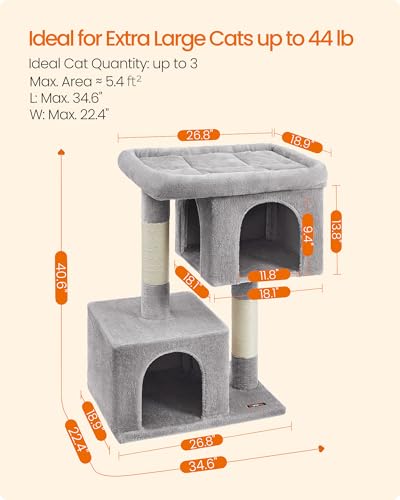
- About 40 inches tall with a large 26.8 by 18.9 inch top perch, which Feandrea says fits one extra large cat or two to three large cats.
- Two caves, two sisal scratching posts, a large base and an anti-tip kit.
Watch out for: The frame is particleboard, not solid wood, and at about 40 inches it will not satisfy cats that want to climb high. Its posts are short for a full stretch, so pair it with a tall post.
Our verdict: A good example of choosing a wide base and roomy platform over extra height. Check current price.

Prime Feandrea Cat Tree, 40.6-Inch Tall Cat Tower, Cute Plush Condo, Light Gray


As an Amazon Associate we earn from qualifying purchases. Product prices and availability are accurate as of the date/time indicated.
A post tall enough to stretch: SmartCat Ultimate Scratching Post
Who it suits: Any home that needs one proper vertical scratcher.
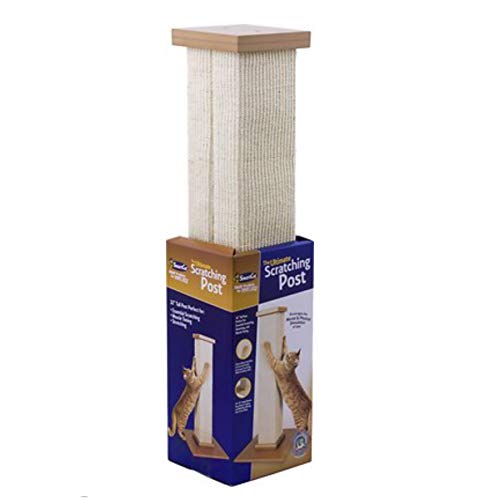
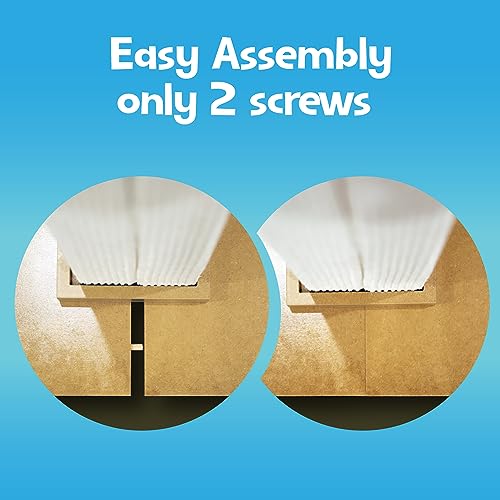
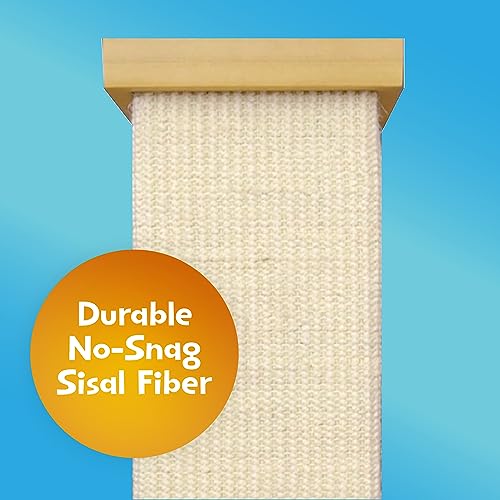
- 32 inches of woven sisal on a wide base, which Cats.com found kept it from wobbling.
- Cats.com named it its top scratching post overall.
Watch out for: Some cats, often older or smaller ones, did not take to the coarse sisal at first.
Our verdict: The simplest way to give a cat a post that matches the height advice above. Check current price.

Prime SmartCat Pioneer Pet Ultimate Scratching Post (Beige)


As an Amazon Associate we earn from qualifying purchases. Product prices and availability are accurate as of the date/time indicated.
A horizontal option: PetFusion Jumbo Cat Scratcher Lounge
Who it suits: Cats that scratch rugs and floors more than furniture.
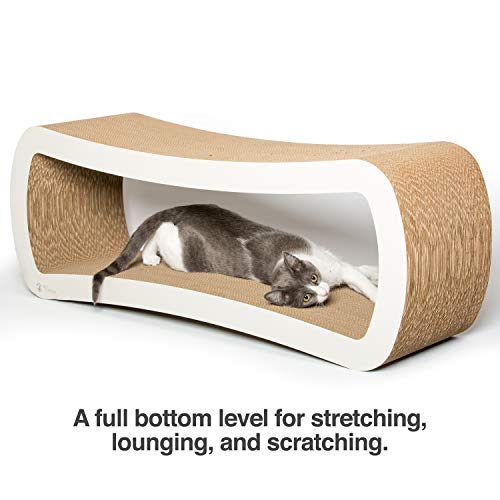
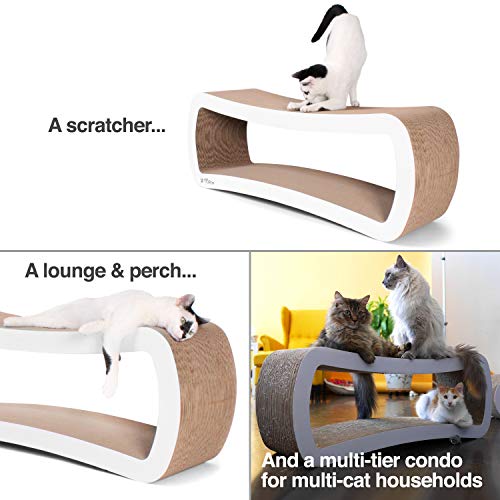
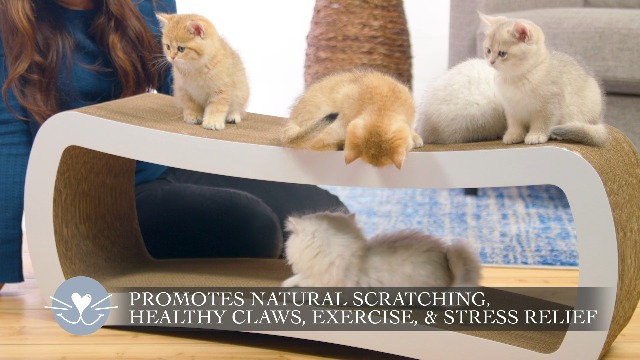
- A large, two-tier curved cardboard lounger, about 39 inches long, that doubles as a bed.
- Made from recycled cardboard with cornstarch glue, and reversible, so you can flip it when one side wears out.
Watch out for: Cardboard wears faster than sisal and leaves some debris.
Our verdict: A useful second scratcher next to a tall post. Check current price.

Prime PetFusion Jumbo Cat Scratcher Lounge (99 x 28 x 36 cm, Cloud White). Superior Cardboard & Construction, significantly outlasts cheaper alternatives.



As an Amazon Associate we earn from qualifying purchases. Product prices and availability are accurate as of the date/time indicated.
Quick Answers
Are cat trees worth it?
For most indoor cats, yes. A good tree gives your cat a place to scratch, climb and rest above the floor in one footprint, which can take pressure off your furniture. A cheap, wobbly tree is the one that ends up unused.
Is a taller cat tree always better?
No. Height without a wide base and roomy platforms makes a tree less safe and less comfortable. A shorter tree that never moves usually beats a taller one that sways.
Do I still need a scratching post if I have a cat tree?
Often yes. Many trees have short posts, and cats like to scratch in more than one place. A tall standalone post near your cat’s favorite scratching spot is a smart addition.
How do I get my cat to use a new tree?
Put it in a busy room near a window, add treats or catnip on the platforms, and praise your cat for using it. Never place your cat on it by force. The ASPCA warns that forcing a cat onto a post can make it avoid the post.
The Bottom Line
So, how tall should a cat tree be? Tall enough for a full stretch on the post and as tall as your space and your cat’s agility allow, but never at the cost of stability. Pick a heavy base and roomy platforms, put the tree near a window in a room your family uses, and add at least one tall post and one horizontal scratcher. Browse our cat furniture guides for picks by situation.
Sources
- Feline behavior problems: destructive behavior, Cornell Feline Health Center
- Claw friendly client resources, American Association of Feline Practitioners
- Feline environmental needs guidelines, VCA Animal Hospitals
- Destructive scratching, ASPCA
- Do cat trees need to be tall, CatsPlay
- Best cat trees for Maine Coons, Catster
- Best scratching posts, Cats.com
Want to know how we choose products? Read How We Review, or go back to the BestPurrPicks homepage for more cat care guides.








Write Your Review
No reviews yet. Be the first to share your experience!