

Last updated: November 9, 2026
The short answer: If you are asking why does my cat keep throwing up, the most common everyday reasons are hairballs, eating too fast and eating something they should not have. But vomiting is a sign, not a diagnosis, and repeated vomiting can also point to illness such as kidney disease, an overactive thyroid or a blockage. Cornell Feline Health Center says a cat that vomits more than once a week should see a vet.
This guide is based on information from the Cornell Feline Health Center, VCA Animal Hospitals and PetMD. The two product picks below are research based. We have not used these products at home.
Important: This guide is general information, not veterinary advice. If your cat is vomiting often, seems unwell, or you think it swallowed something it should not have, call your veterinarian.
First, Is It Vomiting or Regurgitation?
These two look similar on the carpet, but they mean different things, and your vet will want to know which one you saw.
- Vomiting is active. VCA describes it as food being forcefully brought up from the stomach. You will usually see heaving, belly contractions and often some drooling or lip licking first.
- Regurgitation is more passive. According to VCA, it usually happens quickly, without those belly contractions, and often right after eating or drinking. The food often comes out looking barely digested.
VCA also notes that coughing can look a lot like vomiting. If you can, take a short video on your phone the next time it happens. It can help your vet tell these apart.
Common Reasons Cats Throw Up
Hairballs
Cats swallow loose hair when they groom. Cornell describes a hairball as a damp, tube-shaped wad of undigested hair, and says that for many cats, bringing one up every week or two is considered normal. VCA is a bit stricter and suggests calling your vet if hairballs come up more than once a month. Either way, a cat that gags often but brings nothing up, or seems constipated, needs a vet check, since a stuck hairball can cause a blockage.
Eating too fast
This is the classic case of cat throwing up food a few minutes after a meal, often in a neat pile that looks like the kibble went in and came straight back out. PetMD explains that dry food swells as it absorbs water in the stomach, which can trigger a reflex that sends it back up. PetMD notes that this is slightly different from true vomiting.
Eating something they should not
Cornell lists poisonous plants, spoiled food, human medications, string or yarn, small household objects and some human foods as common causes. String, thread, ribbon and fabric are especially risky because they can block or damage the gut. If your cat is a chewer, our guide on why does my cat suck on my blanket covers when fabric sucking turns into swallowing.
Food changes, intolerance or allergy
VCA lists food intolerance or allergy and table scraps among the more minor causes. A sudden switch to a new food can also upset some cats. Change foods slowly, over about a week, mixing more of the new food in each day.
Parasites
Both Cornell and VCA list intestinal worms as a cause, especially in kittens and cats who go outdoors. Your vet can check a stool sample.
Illness
When owners ask why does my cat throw up all the time, this is the group that matters most. Cornell and VCA list kidney disease, hyperthyroidism, diabetes, inflammatory bowel disease, pancreatitis, liver disease, constipation, foreign objects and cancer. VCA also lists urinary blockage, which is an emergency.
Why Does My Cat Throw Up After Eating?
If the food comes up within minutes of the meal, mostly whole, and your cat then acts normal and wants to eat again, speed is a likely reason. A few changes often help.
- Feed smaller meals more often. PetMD suggests small, frequent meals, and notes that timed automatic feeders can help with this.
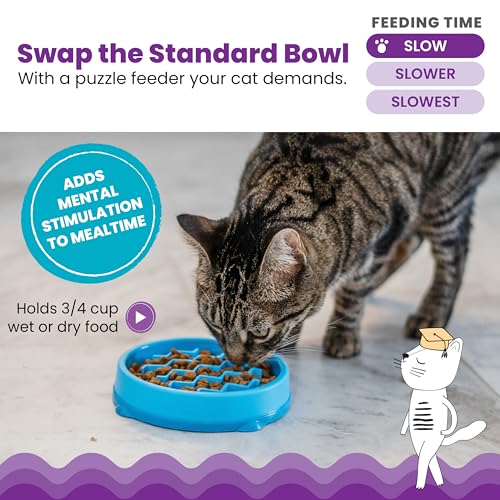
- Slow your cat down. PetMD suggests spreading kibble on a large flat baking pan, or using a maze-style slow feeder or a puzzle feeder so your cat has to work for each bite.
- Try a different food. If the problem happens with one brand or mostly with dry food, PetMD says switching brands or moving to canned food may help. Talk to your vet before a big diet change.
- Feed cats apart. In multi-cat homes, a cat who feels it has to compete may gulp. A separate room or a different corner can calm things down.
If your cat still brings up food often after these changes, or is losing weight, see your vet. Regurgitation that keeps happening can come from a problem in the esophagus, and repeated vomiting after meals can have a medical cause too.
What to Do at Home When Your Cat Throws Up Once
A single episode in a cat that is otherwise bright, eating and using the litter box normally is usually not an emergency. VCA notes that many cases of sudden vomiting improve on their own within 24 hours.
- Clean up and look at what came up: hair, whole food, liquid, grass, string, plastic or anything red or dark.
- Make sure fresh water is always available. VCA stresses that water helps prevent dehydration.
- Watch your cat for the next day. Is it eating, drinking, peeing and acting like itself?
- Write down the time and what you saw. A simple note on your phone makes the vet visit much easier if it happens again.
- Do not give human medications. Cornell lists them as a common cause of vomiting, and many are toxic to cats.
If your vet suggests a bland diet, VCA says it is usually given in small, frequent portions with no other food or treats during that time, then the normal diet is brought back slowly over several days.
When to See a Vet
Call your veterinarian promptly if any of these apply. Go to an emergency clinic if your vet is closed.
- Vomiting more than once a week, which Cornell says should be checked.
- Vomiting that keeps going for more than one to two days, even if your cat seems fine otherwise, according to VCA.
- Blood in the vomit.
- Low energy, weakness, hiding, fever or belly pain.
- Not eating or eating much less than usual.
- Diarrhea, drinking much more or much less, or peeing much more or much less.
- Straining in the litter box or producing little or no urine. This can be a urinary blockage and is an emergency.
- You saw, or suspect, your cat swallowed string, a hair tie, a toy part, a plant, a medication or anything toxic.
- Repeated retching with nothing coming up.
- A kitten, a senior cat or a cat with a known health condition that is vomiting.
- Weight loss, even if the vomiting seems mild.
Cornell explains that a vet will usually start with your history and an exam, then bloodwork and a stool check, and sometimes X-rays or ultrasound. Your notes and video really help here.
Gear That Can Help
These do not fix a medical problem. They help with two everyday causes, fast eating and swallowed hair, once your vet has ruled out illness.
Best for cats who gulp their food: Catstages Kitty Slow Feeder Bowl
Who it suits: Cats who empty the bowl in seconds and bring the meal back up soon after.
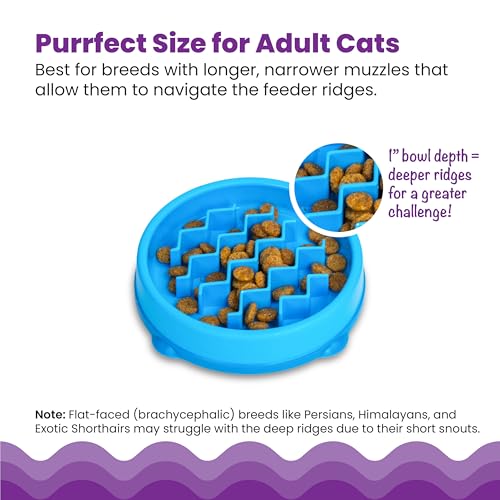
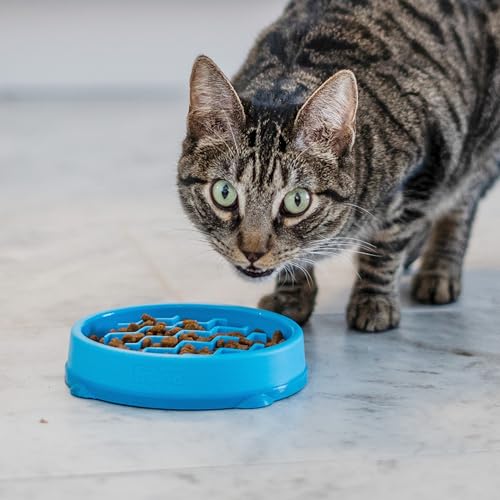
- Holds about 3/4 cup of wet or dry food and has a maze design meant to slow eating, according to Outward Hound, the maker of Catstages.
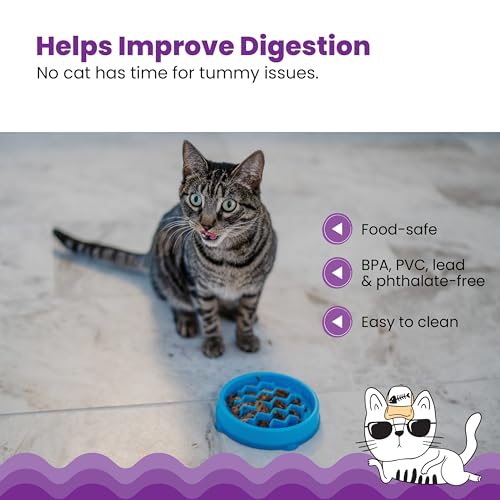
- Has a non-slip base and is made without BPA, PVC or phthalates, according to Outward Hound.
Watch out for: Wet food gets stuck in the grooves, so plan to scrub it after every meal. The brand page gives mixed cleaning advice, so hand washing is the safe bet. Some cats get frustrated at first, so start with easy portions.
Our verdict: A simple, low-risk first step for a speed eater, and easier than balancing kibble on a baking pan. Check current price.

Prime Catstages Kitty Slow Feeder Bowl for Cats & Kittens, 3/4 Cup, Blue, 5"




As an Amazon Associate we earn from qualifying purchases. Product prices and availability are accurate as of the date/time indicated.
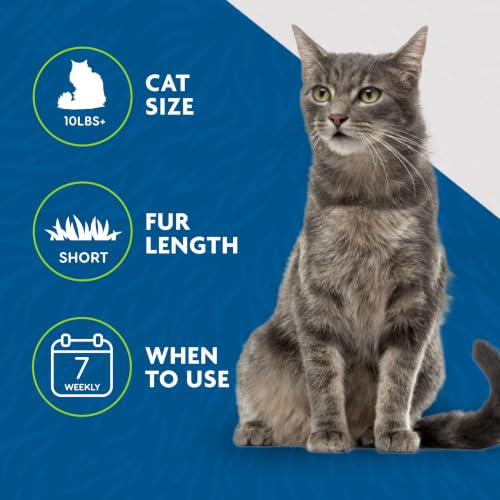
Best for cutting down on swallowed hair: FURminator deShedding Tool
Who it suits: Short-haired cats who shed heavily and bring up hairballs more than you would like.
- Designed to reduce loose hair from shedding, according to the FURminator listing.
- Sized for medium to large cats with short hair, according to FURminator, which also sells small cat and long hair versions.
Watch out for: It is easy to overdo. Brush gently for a few minutes, stop if the skin looks red, and do not use it on sore or broken skin. Long-haired cats need the long hair version or a slicker brush and comb.
Our verdict: Less loose fur on your cat means less fur in your cat, which is the simplest hairball habit to start. Check current price.

Prime FURminator Medium to Large Cat deShedding Tool for Short Hair







As an Amazon Associate we earn from qualifying purchases. Product prices and availability are accurate as of the date/time indicated.
Quick Answers
Is it normal for cats to throw up once in a while?
An occasional hairball or a one-off episode in a healthy cat is common. Regular vomiting is not something to accept as “just how cats are.” Cornell’s line is more than once a week means a vet visit.
Can I give my cat something for nausea?
Not from your own medicine cabinet. VCA mentions anti-nausea and stomach-protecting drugs that vets prescribe for cats, but human medications are a common cause of poisoning. Ask your vet first.
Should I stop feeding my cat after it vomits?
Do not hold back food for a long time without talking to your vet. Keep water available and ask your vet what to offer and when.
The Bottom Line
So, why does my cat keep throwing up? Often it is hairballs, speed eating or something your cat swallowed, and small changes like slower meals and regular brushing can help. But vomiting more than once a week, or any vomiting with low energy, not eating, blood or litter box trouble, needs a vet. If you have also noticed odd eating habits, our guide for when my cat is eating litter explains the health links. For more answers to everyday cat questions, browse our cat health and behavior library.
Sources
- Vomiting, Cornell Feline Health Center
- Vomiting in Cats, VCA Animal Hospitals
- How to Slow Down a Cat Who Is Eating Too Fast, PetMD
- Kitty Slow Feeder Cat Bowl, Outward Hound
Want to know how we choose products? Read How We Review, or go back to the BestPurrPicks homepage for more cat care guides.








Write Your Review
No reviews yet. Be the first to share your experience!