

Last updated: October 11, 2026
The short answer: The best litter box for senior cats is large, open and easy to walk into, with a low entry of just a few inches and no lid. Put one on every floor your cat uses, close to where it rests, and keep the litter soft and shallow. If your older cat starts missing the box, standing instead of squatting, or hesitating at the edge, book a vet visit, because these are common signs of pain.
This guide is research based. It draws on VCA Animal Hospitals’ guidance on aging cats and the ASPCA’s litter box advice. We have not used these boxes at home.
Signs Your Older Cat Is Struggling
VCA Animal Hospitals lists litter box changes among the signs of pain in aging cats:
- Urine or stool accidents, especially in a cat that used to be reliable.
- Going to the box but refusing to get in, particularly a covered box.
- Standing to pee or poop instead of squatting, which can hurt sore joints.
- Reluctance to jump or use stairs.
- Less grooming, or licking over joints.
Any of these deserves a vet check first. Arthritis is common in older cats and can be treated, which often fixes the box problem too.
What Makes a Good Senior Cat Litter Box
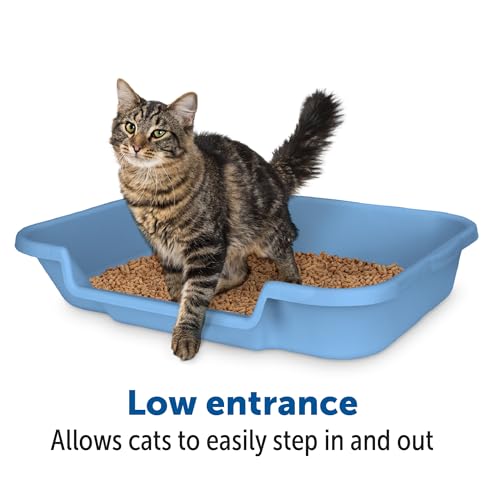
- Low entry. A low entry cat litter box lets a stiff cat step in rather than climb. A few inches is plenty.
- No lid. VCA advises lower-sided boxes and removing the cover once pain is managed.
- Large floor area. More room to turn and squat without bumping the walls.
- Higher back and sides, if your cat sprays high, as long as the front stays low.
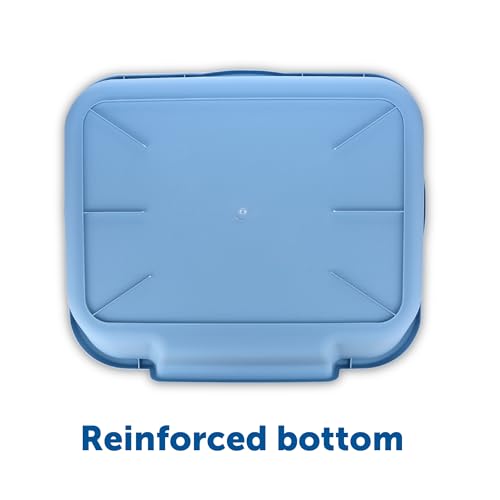
- Non-slip base so the box does not shift as the cat steps in.
A low sided litter box may let more litter out. That is a fair trade for a cat that can use it comfortably, and a mat handles the rest.
Placement Matters as Much as the Box
- One on every floor. VCA notes stairs can be too much for a cat with back or hip pain.
- Near favorite resting spots, so the trip is short.
- Quiet and well lit. A night light helps older cats with weaker eyesight.
- Enough boxes. The ASPCA recommends one per cat plus one, and notes that older or arthritic cats are especially put off by boxes that are hard to reach or have high sides.
Litter Choices for Older Cats
- Soft, fine, unscented clumping litter is gentle on sore paws and easy to scoop.
- Shallow depth, about one to two inches, so the cat does not sink.
- Avoid large hard pellets if your cat seems uncomfortable standing on them.
- Light-colored litter makes it easier to spot changes in urine or stool, which matters more as cats age.
Options Worth a Look
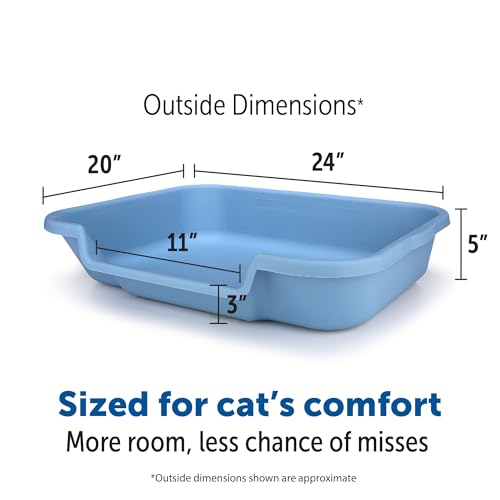
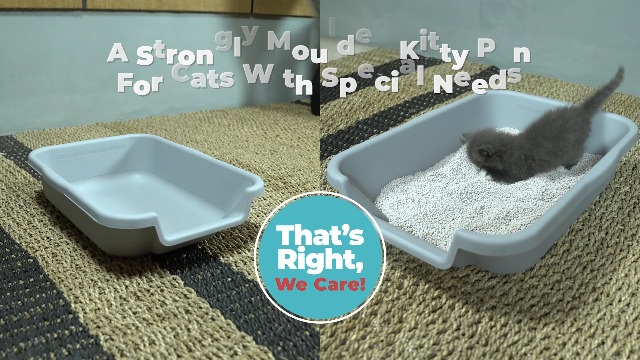
Purpose-built: KittyGoHere senior box
Who it suits: Older or arthritic cats that struggle with standard box walls.
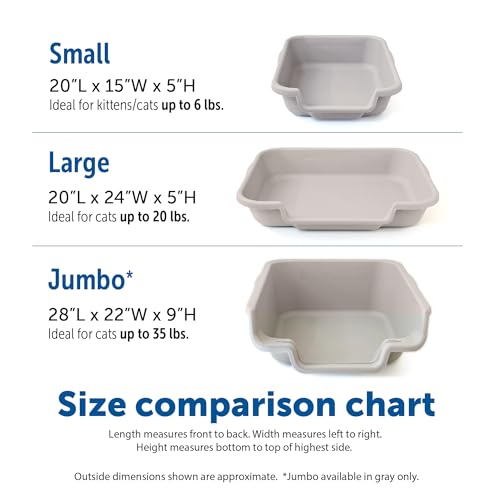
- A large pan designed for senior cats, with a low front entry.
- Open top, so there is no lid to trap odor or block the way out.
- Lightweight plastic that is easy to move and clean.
Watch out for: It is plastic, so replace it once it is scratched and holding odor. Check the dimensions against your space.
Our verdict: A simple, ready-made litter box for elderly cat needs, without any DIY. Check current price.

Prime KittyGoHere Senior Cat Litter Box, Large Litter Pan, Little Boy Blue



As an Amazon Associate we earn from qualifying purchases. Product prices and availability are accurate as of the date/time indicated.
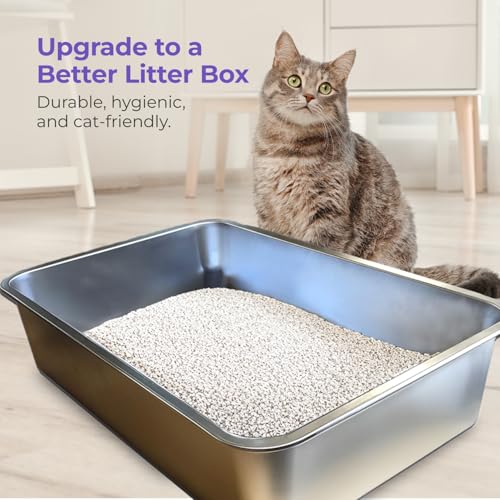
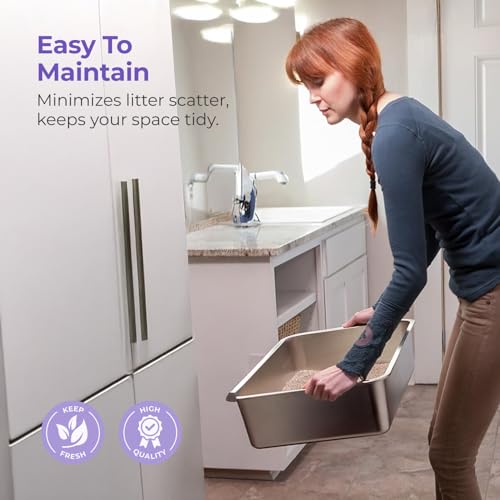
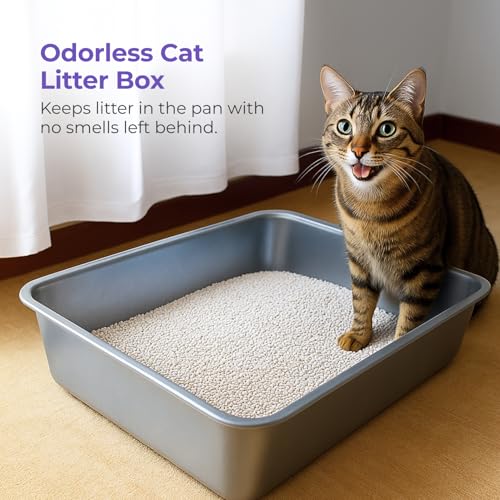
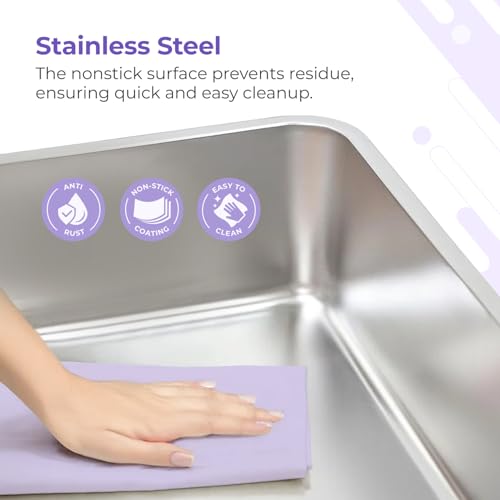
Durable open pan: iPrimio XL Stainless Steel
Who it suits: Senior cats that can still step over modest sides and owners who want a box that will not hold odor.
- Large 23.5 by 15.5 inch steel pan.
- Open top, with sides of roughly 6 to 7.5 inches depending on the version.
- Steel resists the scratches that trap smell.
Watch out for: The sides are taller than a dedicated low entry litter box, so it suits mildly stiff cats better than severely arthritic ones. It is heavy.
Our verdict: A long-lasting choice for older cats that still move fairly well. Check current price.

Prime iPrimio Stainless Steel Cat Litter Box, Nonstick, XL 23.5" x 15.5" Open Pan




As an Amazon Associate we earn from qualifying purchases. Product prices and availability are accurate as of the date/time indicated.
The budget DIY option
Many owners make an elderly cat litter box from a large, shallow storage tote. Cut a low, wide entry in one long side, sand the edges smooth, and leave the other sides higher. It is cheap, roomy and easy to replace.
When the Box Is Not the Only Problem
Older cats can also develop kidney disease, diabetes or thinking changes, which can all affect litter habits. If accidents are mostly urine, our guide on cats peeing outside litter box spots covers the medical side. If your senior cat suddenly stopped using the box altogether, our guide for a cat no longer using litter box spots walks you through it.
When to See a Vet
- Any new accidents, straining or standing to eliminate.
- Drinking or peeing much more than usual.
- Stiffness, limping or reluctance to jump.
- Confusion, night crying or getting lost in the home.
Quick Answers
Is a covered box OK for a senior cat?
Usually not. VCA notes cats in pain may refuse covered boxes, and it advises removing the cover.
What is the best litter box for cats with arthritis?
A large, open box with a very low entry, placed close to where the cat rests, with soft litter. Pair it with pain management from your vet.
Do older cats need more boxes?
Often, yes. Shorter trips help, so add a box near their favorite spots.
The Bottom Line
The right litter box for senior cats is low, open, roomy and close by, with soft, shallow litter. Watch for signs of pain, get a vet check, and make each trip to the box easy. For more help at every life stage, see our guides for every life stage.
Sources
Read How We Review, or return to the BestPurrPicks homepage.







Write Your Review
No reviews yet. Be the first to share your experience!