

Last updated: October 11, 2026
The short answer: Here is how to clean cat litter box setups so your cat keeps using them: scoop clumps and solids every day, then on a regular schedule empty all the litter, wash the box with hot water and mild unscented soap, rinse well, dry it fully and refill with one to two inches of fresh litter. Skip bleach-heavy, ammonia or strongly scented cleaners. A clean, neutral-smelling box matters more to your cat than any fancy product.
This guide is research based. It draws on shelter guidance from the ASPCA and the Wisconsin Humane Society, and on health advice from the CDC for pregnant owners.
What You Need
- A sturdy metal or plastic scoop with slots sized for your litter.
- Bags for waste, and a lidded bin.
- Disposable gloves.
- Mild unscented dish soap, or plain hot water.
- A scrub brush or sponge kept only for the box.
- An enzyme cleaner for accidents outside the box.
Daily: Scoop
- Scoop out every clump and all solids, digging to the bottom and corners.
- Scrape any litter stuck to the sides.
- Top up with fresh litter to keep the depth even.
- Bag the waste and take it out, or use a sealed bin.
The ASPCA recommends scooping at least once a day. With two or more cats, twice is better.
Regularly: The Full Wash
How often depends on your litter and cats. Our guide on how often to clean litter box setups breaks it down by litter type. When it is time, this is the best way to clean a litter box:
- Empty everything. Dump all litter into a bag. Do not flush clay litter.
- Rinse out the dust with hot water.
- Wash with warm water and a little mild, unscented dish soap. The ASPCA suggests warm water with unscented soap, baking soda, or no soap at all.
- Scrub corners and seams, where urine film builds up.
- Rinse thoroughly so no soap smell remains.
- Dry completely. A damp box makes clumping litter stick.
- Refill with about one to two inches of litter, the depth the ASPCA says most cats prefer.
What Not to Use
- Ammonia-based cleaners. Urine contains ammonia, so these can make the box, or your floor, smell like a toilet to your cat.
- Strong perfumes, citrus or pine cleaners. Many cats dislike the smell and may avoid the box.
- Undiluted bleach. If you disinfect after illness, use a very weak solution, rinse many times and air it out fully. Never mix bleach with other cleaners.
- Abrasive pads on plastic. Scratches hold odor. If your plastic box is worn, consider replacing it. A metal cat litter box resists scratches better.
Cleaning Up Accidents Outside the Box
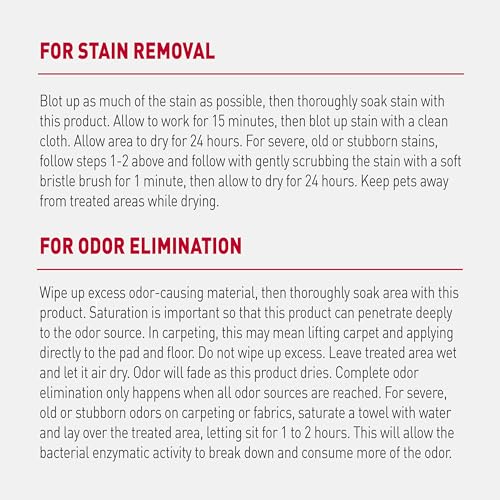
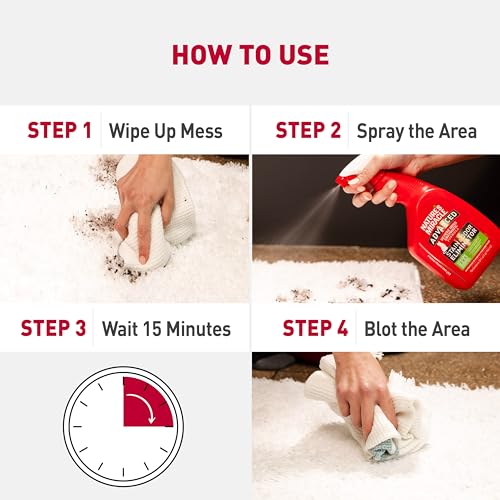
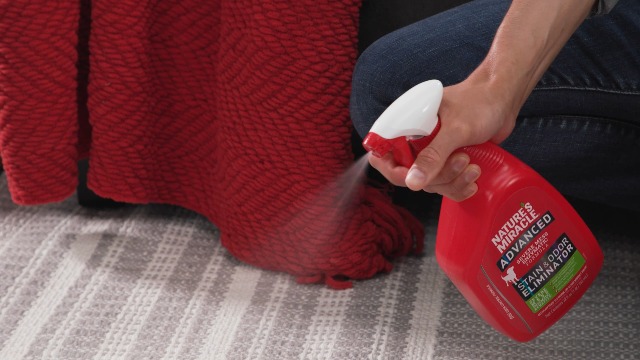
Blot up as much urine as you can, then soak the spot with an enzyme cleaner and let it work as the label says. Enzymes break down the residue cats can still smell after ordinary cleaning, which helps stop repeat accidents.
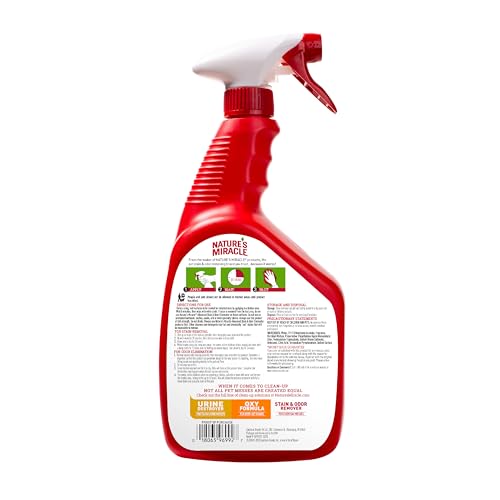
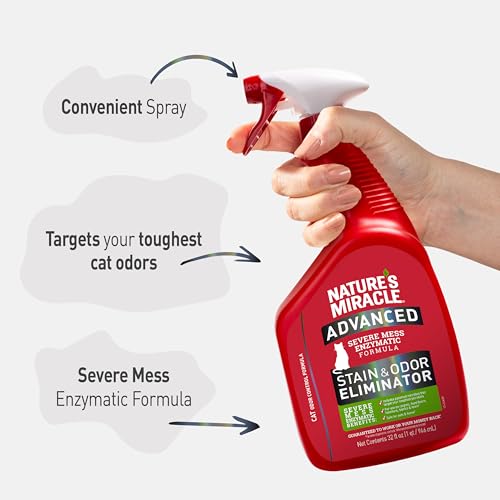
Nature’s Miracle Advanced Cat Stain and Odor Eliminator
Who it suits: Owners dealing with misses on floors, mats or carpet.
- An enzyme-based spray made for cat messes.
- Easy to find and reorder.
- Useful for the floor and mat around the box during a full clean.
Watch out for: It needs time to work and a spot check on fabrics first. It is not meant for the inside of the box, where plain soap and water is better.
Our verdict: A good product to keep next to your scoop. Check current price.

Prime Nature’s Miracle Advanced Cat Stain & Odor Eliminator, Severe Mess, 32 oz


As an Amazon Associate we earn from qualifying purchases. Product prices and availability are accurate as of the date/time indicated.
Living in an Apartment
If you are figuring out how to clean a litter box in an apartment without a yard or garage:
- Wash the box in the bathtub or shower, then rinse the tub well.
- Line the tub with a towel first to avoid scratches.
- Bag used litter tightly and take it straight to the trash room.
- Keep a small fan or open window running while you clean.
- Put a mat under the box. A good cat litter box mat makes the area around it easier to keep clean.
If You Are Pregnant or Have a Weak Immune System
Cat feces can carry the parasite that causes toxoplasmosis. The CDC advises changing the litter box daily, because the parasite does not become infectious until 1 to 5 days after a cat passes it, and says people at higher risk should talk to their healthcare provider. If someone else can take over litter duty during pregnancy, that is the simplest option. If not, wear gloves and wash your hands well afterward.
Choosing a Box That Is Easy to Keep Clean
The easiest to clean litter box is usually a simple, large, open box with smooth sides and rounded corners. Hoods, liners and complex shapes add places for urine to hide. Steel or new, smooth plastic wipes cleaner than old scratched plastic.
Quick Answers
How to clean a cat litter box that still smells after washing?
Scratched plastic holds odor. Try a soak in warm water and baking soda, rinse, and dry in the sun. If it still smells, replace the box.
Is cleaning litter box once a week enough?
Not for scooping. Scoop daily and save the weekly or monthly slot for the full wash.
Can I use vinegar?
A diluted vinegar rinse can help with mineral film, but rinse it out well. Some cats dislike the smell.
What is the quickest way to learn how to clean a cat’s litter box for the first time?
Follow the daily scoop and full wash steps above, keep the products unscented, and stick to the schedule.
The Bottom Line
Scoop every day, wash the empty box on a schedule with hot water and mild unscented soap, dry it, and refill shallowly. Avoid ammonia, strong scents and harsh scrubbing. That is how to clean cat litter box setups so they stay fresh and your cat keeps using them. If you just want to know how to clean litter box mats and floors too, use an enzyme cleaner. You will find more in our litter box care section.
Sources
- Litter box problems, ASPCA
- Litter box success, Wisconsin Humane Society
- Preventing toxoplasmosis, CDC
Read How We Review, or visit the BestPurrPicks homepage for more guides.





Write Your Review
No reviews yet. Be the first to share your experience!